
In cement production processes, belt bucket elevators are widely‑used vertical conveying equipment. Featuring simple structure and easy maintenance, they are mainly applied for vertical lifting of normal‑temperature powdery and granular materials such as raw meal, cement and fly ash. Owing to their intuitive structure and straightforward working principle, they are often regarded as low‑failure equipment with insufficient attention paid to daily inspection and maintenance.
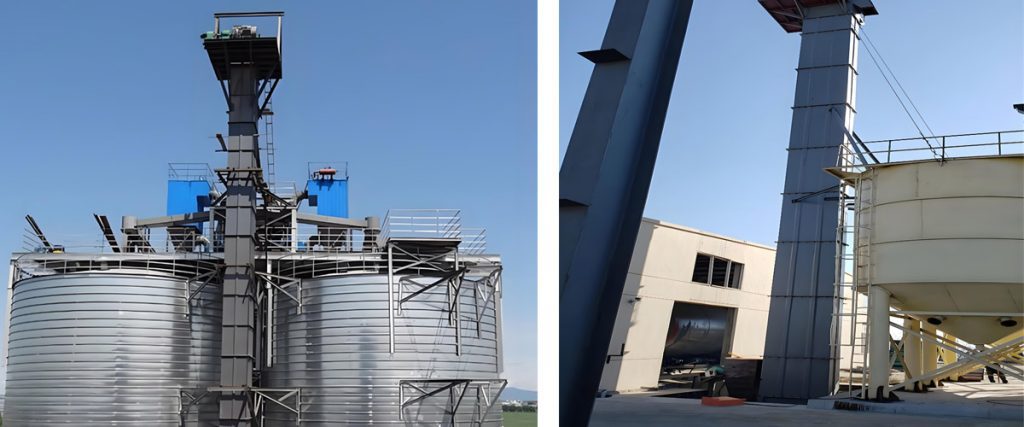
1. Essence of Belt Deviation & Common On‑site Misunderstandings
2. Main Causes, Cascading Risks and Remedial Measures for Belt Deviation
2.1 Non‑standard belt joint alignment (most frequent cause)
2.2 Misaligned head pulley and tail pulley (concealed root cause)
Three typical misalignment scenarios: 1. Head and tail pulley shafts are level but not located within the same vertical plane; 2. Both shafts lie within one vertical plane yet lack proper horizontality; 3. Pulley shafts are neither parallel, coplanar nor horizontal.
3. Field Case Review
Upon commissioning, belt deviation appeared within 30 seconds. Maintenance personnel repeatedly adjusted take‑up tension and cleared accumulated boot material for half a day without improvement. Further inspection traced the fault to the skewed belt joint creating uneven tension. After re‑splicing and precise alignment, the elevator ran normally.
This case demonstrates that belt deviation rarely originates purely from incorrect tension. Most problems stem from careless assembly and installation. Surface adjustments cannot resolve hidden root causes. Root‑cause identification is essential for reliable long‑term operation.
4. Progressive Damage and Economic Impacts of Belt Deviation
Belt deviation develops in three progressive stages with rising operational losses:
- Early latent stage: Slight belt drift, edge friction against casing, rubber fraying, local heating and accelerated rubber aging. Symptoms are subtle and frequently ignored.
- Mid‑term performance loss: Tilted buckets cause poor filling and incomplete discharge. Return material accumulates inside the boot. Motor current and power consumption rise while production output drops, generating continuous invisible economic loss.
- Catastrophic failure stage: Belt edge seizure or tearing occurs. The plant suffers unplanned shutdown, high spare‑part costs, labor expenses and production interruption.
Many site teams miscalculate economics: they believe continued operation avoids shutdown cost. Nevertheless, extra power usage, yield loss and accelerated component wear during defective operation often exceed the cost of short‑term corrective shutdown. Tolerating known deviation increases total maintenance expenditure.
5. Diverse Operating Conditions for Bucket Elevators in Cement Plants
Cement plants handle varied materials including raw meal, finished cement, slag, gypsum and fly ash. Material properties such as particle size, temperature and flow behaviour differ significantly and bring diverse failure modes. Belt bucket elevators apply primarily for normal‑temperature powder materials. Hot clinker and similar high‑temperature feeds require chain bucket elevators. Improper equipment selection will increase failure frequency.
One harmful field workaround should be avoided: applying rosin onto the head pulley to temporarily ease slip or wandering. This delivers short‑term relief but masks fundamental faults. Real underlying defects keep worsening until severe breakdown occurs.
Bucket Elevator Quick‑Reference Troubleshooting Table
| Observed On‑site Symptom | Probable Root Causes | Recommended First‑step Actions | Practices to Avoid |
|---|---|---|---|
| Belt rubs to one side, frayed belt edges | Misaligned belt joint; excessive installation error of head / tail pulley; uneven tension on two sides; off‑centered feeding | Inspect belt joint edge alignment first, then check head‑tail pulley alignment; adjust belt tension only afterwards | Merely adjust tension screws and perform repeated trial runs |
| High motor current, material buildup in boot section | Excessive return material, incomplete discharging; uneven feed rate; blocked discharge chute | Clear material buildup in the boot; verify feed uniformity; check bucket speed and discharge outlet | Directly upgrade motor or raise overload protection setting |
| Belt slips, head pulley spins without moving the belt | Insufficient tension; worn head pulley lagging; equipment overload | Reset belt tension; inspect head pulley lagging; verify actual feed volume | Apply rosin or pour oil onto head pulley |
| Skewed / detached buckets, metallic impact noise | Loosened or fatigued fixing bolts; in‑service collision; startup with residual material after shutdown | Stop equipment; retighten bolts with anti‑loosening measures; replace deformed buckets in batches | Keep running even with several missing buckets |
| Hot bearing housing, darkened grease | Insufficient or excessive lubrication; seal failure with dust ingress; shaft misalignment | Standardize grease filling interval & quantity; inspect seals; re‑check shaft alignment | Repeatedly add grease simply because of overheating |
| Dust leakage at flanges & inspection hatches | Aged sealing gaskets; loose bolts; distorted casing; simplified low‑cost sealing design | Replace gaskets; retighten bolts to specified torque; inspect casing deformation | Use tape or putty as makeshift repair for inspections |
| Bucket reverse rotation and material backflow after shutdown | Worn or failed backstop device | Replace backstop at standstill; perform functional reliability test | Continue running with known defects and postpone repair until major overhaul |
| Sudden shutdown plus loud abnormal noise | Belt / chain breakage, jamming, sprocket tooth jumping | Emergency stop; identify root cause before maintenance; never force startup with load | Repeated jog‑start attempts |
6. Standard Operation & Maintenance Practices for Stable Performance
There is no “magic fix” for bucket elevator reliability. Stable long‑run performance depends on solid standardized routines:
- Strict installation & overhaul accuracy control: Use wire alignment and dial indicators for head‑tail pulley setup. Record alignment measurements. Keep cumulative misalignment within technical specifications to eliminate deviation risks from the outset.
- Treat belt splicing as a critical independent process: Require edge‑straightness inspection after every joint. A small amount of extra time at splicing drastically cuts future failure risk. Do not accept “good‑enough” joints.
- Implement jog‑test procedure after maintenance: Avoid full‑speed startup after belt change or overhaul. Run in jog mode first, observe belt tracking, friction and movement. Proceed to full operation only after confirming normal behaviour.
- Deploy standardized inspection checklists: Document clear inspection items: belt tracking, abnormal noise, housing temperature rise, leakage and motor current. Post checklists near the elevator boot. Replace over‑reliance on individual operator experience with repeatable inspection standards.
- Repair anomalies promptly: Shut down for root‑cause analysis when belt deviation is detected. Refrain from prolonged defective operation. Compare total cost of short‑term maintenance versus cumulative losses from running damaged equipment.
7. Conclusion
The service life, operational stability and failure frequency of bucket elevators do not depend entirely on manufacturing quality. To a larger extent, they are determined by installation precision and daily operation & maintenance management. Routine detailed inspections, standardized workflows and root‑cause rectification of hidden risks are critical to preventing bucket elevator belt deviation, cutting maintenance costs and ensuring continuous and stable production‑line operation.
DARKO is an original manufacturer specialising in R&D, production and complete‑set solutions for bucket elevators. We deliver highly reliable, low‑failure belt and chain bucket elevators for cement, building materials, mining and powder‑processing industries. Feel free to contact us for bucket‑elevator‑related equipment selection, custom modification or technical upgrade requirements.
 English
  Russian
  French
  Portuguese
  Arabic
  Spanish
  Japanese