
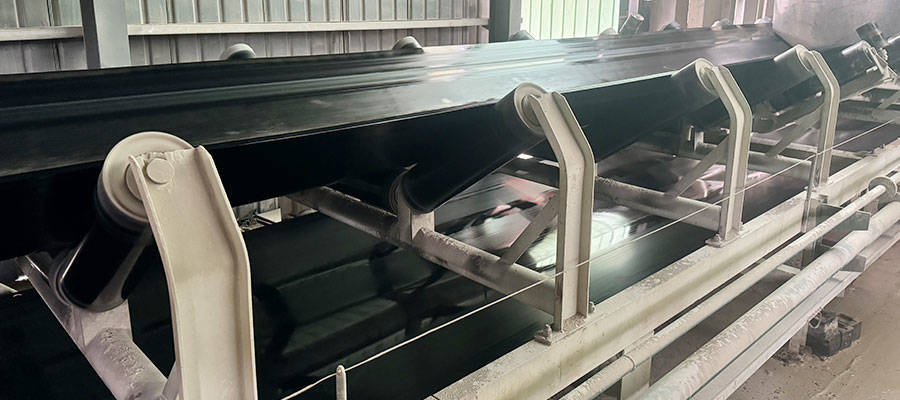
セメントプラントは、原料の粉砕、クリンカの脱炭酸から最終製品の梱包まで、複雑な生産工程を有しています。各工程では ベルトコンベヤ.
セメントプラントは、高温、粉塵、強い摩耗、大量の粉塵など、過酷な条件下で作業します。適切なヘビーデューティーベルトコンベヤを選択することで、安定した生産を維持し、メンテナンスコストを削減することができます。.
1.ここから始めましょう工程と素材のマッチング
すべての作業に同じコンベアを使うことはできません。まず、コンベヤを工程と材料に合わせます。.
- 原材料の取り扱い石灰石、粘土、鉄粉。.特徴:大きな塊、重い、研磨性が高い。.推奨:ヘリンボーンベルトを使用した一般的なヘビーデューティーベルトコンベア。.
- クリンカハンドリング高温クリンカー.特徴150-200℃、高硬度、研磨性抜群。.推奨:耐熱ヘビーデューティーベルトコンベア。.
- パウダーハンドリング原料ミール、セメント粉、フライアッシュ。.特徴:流れやすい、ホコリが出やすい、くっつきやすい。.推奨:完全密閉ベルトコンベヤまたは急角度側壁ベルトコンベヤ。.
- 完成品の発送袋入りまたはバルクセメント。.特徴:清潔さが必要、破損防止。.推奨:軽い滑り止めベルトコンベアまたはパイプベルトコンベア。.
2.3つの主要パラメータ
タイプを選んだら、次の3つの限界値を計算します。.
(1) 容量
容量を窯の出力に合わせます。.
1時間当たりの最大容量を設計し、10-20%の安全マージンを確保します。.
- 小規模プラント(≤2000 t/d):ベルト幅800-1000 mm。.
- 大型プラント(≥2500 t/d):ベルト幅1200-1600 mm。.
(2) スピード
速度を制御して材料を保護し、効率を向上させます。.
- パウダーとクリンカー:1.2~1.6 m/sに減速。速度が速いと粉塵がひどくなり、ベルトが損傷します。.
- 塊状の石灰岩:最高速度1.8~2.5 m/sで高効率を実現。.
(3) 傾斜角度
材料の安息角に従ってください。.
- 通常の塊状素材:最大角度18~22°。.
- 高温クリンカ:角度を16°以下に保ちます。.
- 限られたスペース:急角度の側壁コンベヤを使用してください。30~90°の角度で持ち上げることができ、スペースを節約できます。.
3.セメント工場の状況への適応
セメント工場では、耐熱性、耐摩耗性、防塵性という3つの特別な設計が求められます。.
(1) 耐熱性(クリンカ用)
- 200℃以上に耐える耐熱ベルトを使用してください。.
- 耐熱ベアリングと高温グリースを取り付けます。.
(2) 耐摩耗性(原料用)
- 肉厚または耐摩耗性のアイドラーを使用してください。.
- シュートの内側にセラミックライナーを入れます。.
(3) 粉塵対策(粉体)
- 完全に密閉されたカバーを使用してください。.
- ダスト除去ポートを追加して、中央ダストシステムに接続します。.
4.安全性と容易なメンテナンス
セメント工場は年中無休で稼働しています。ダウンタイムは非常にコストがかかります。.
必要な安全装置
- 暴走防止スイッチ
- 非常停止ケーブル
- スピードセンサー
- 傾斜コンベア用ロールバック防止装置
メンテナンスのヒント
- 交換が簡単なアイドラーを使用してください。.
- コストを下げるために標準部品を選択します。.
5.特殊用途
- 長距離輸送複数の駆動装置と自動張力調整機能を備えた頑丈なコンベヤを使用しています。.
- 複数の搬出入ポイントコンベヤーは可動式か可逆式を使用してください。.
- 厳しい環境規則パイプベルトコンベヤを使用し、粉塵の漏れがありません。.
6.よくあるご質問
Q1:最も重要な最初のステップは何ですか?
A1:まず、材料を詳細に分析します。粒子径、密度、温度、水分、摩耗性などを記録します。これらのデータはコンベヤのあらゆる部分を決定します。間違ったデータは能力不足や無駄な投資につながります。.
Q2:耐熱ベルトはどのくらいの温度で使用できますか?耐久性は?
A2:良い耐熱ベルトは短時間の200~250℃に対応できます。しかし、高熱はベルトの寿命を縮めます。150℃を超えると、ベルトは通常の寿命の1/2か1/3しか持たないかもしれません。耐熱部品を使用し、冷却部を追加してください。.
Q3: 長距離コンベアの特徴は何ですか?
A3:低抵抗と安定した張力を重視。.
- 複数のドライブユニットを使用します。.
- 自動テンションシステムを使用してください。.
- スチールコードベルトを使用してください。.
- 安全のためにフルラインモニタリングを設置します。.
結論
コンベヤをプロセス、材料、能力、作業条件に適合させます。.
頑丈なコンベヤの専門メーカーにご相談ください。材料データ、出力、レイアウトをご提供ください。あなたのセメントプラントのための完全で、安定した、環境に優しい搬送ソリューションが得られます。.
 English
  Russian
  French
  Portuguese
  Arabic
  Spanish
  Japanese