
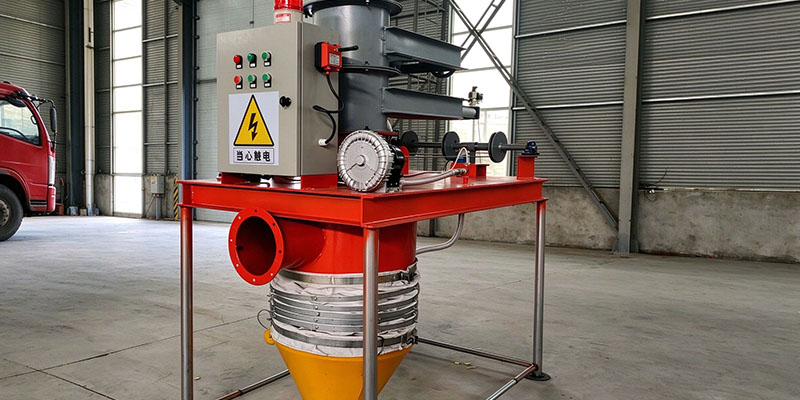
A bulk loading machine level switch (also called a material level switch or level sensor) is the key component that prevents overfilling on a dry ash bulk loader. As a truck is loaded, it monitors the material level inside the tank: when the tank is full, it triggers an alarm and signals the discharge valve to close.
In fly ash, mineral powder and cement powder loading yards, dust is heavy and conditions are harsh. The level switch can easily develop faults — false alarms, no alarm at all, or an unstable signal. When it fails, material overflows, causing dust pollution and wasted product.
If you’re dealing with “it alarms before the truck is full”, “it doesn’t alarm when full” or “the alarm is intermittent”, this guide is organized by symptom. Each fault lists the likely causes with their fixes, and a quick-reference table helps you find the answer fast.
Quick-Reference Table: Level Switch Faults and First Actions
症状 | 考えられる原因 | First Action |
Alarms before the tank is full (false alarm) | Probe dust buildup, poor mounting angle, signal interference, sensitivity too high | Clean probe, adjust mounting, use shielded cable, lower sensitivity |
No alarm when the tank is full | Damaged probe, no power, probe buried, worn components | Replace probe, check power, clear buildup, replace controller |
Intermittent / unstable alarm | Oxidized loose terminals, damaged cable, cable pulled during lift, voltage fluctuation | Clean terminals, replace cable, leave slack, add a stabilizer |
Alarm works but the gate valve won’t close | Failed output relay, wrong interlock wiring, valve control fault | Replace relay, recheck wiring, test the valve separately |
Frequent alarms, hard to reset | Powder caking, moisture on the probe | Increase purging, use a moisture-resistant model, add auto-purge |
Fault 1: Alarms Before the Tank Is Full (False Alarm)
- Cause 1: Dust builds up on the probe surface and covers the sensing area. Fix: stop and clean the probe, and purge it each shift as routine maintenance. In heavy-dust applications, add an auto-purge air line.
- Cause 2: A poor mounting angle lets the material stream spray directly onto the probe. Fix: reposition the probe and angle it away from the direct flow, and add a deflector plate.
- Cause 3: Heavy dust and poor cable shielding cause electrical interference. Fix: replace with shielded signal cable, protect the cable run, and keep it away from motor power lines.
- Cause 4: Sensitivity is set too high. Fix: open the parameter menu and lower sensitivity step by step until normal loading no longer false-alarms.
Fault 2: No Alarm When the Tank Is Full
Symptom — The tank is full but the level switch gives no alarm or signal, so loading can continue and overfill.
- Cause 1: The probe is worn or damaged by impact. Fix: power off and inspect the probe; replace it if damaged.
- Cause 2: Loose or broken power wiring. Fix: check the terminals, tighten loose connections, measure the supply voltage with a multimeter and repair broken wires.
- Cause 3: The probe is buried or jammed by large clumps of material. Fix: clear caked material around the probe so the sensing area is unobstructed.
- Cause 4: Internal components have worn out. Fix: first test the signal path (for example with a short-circuit test). If power is fine but there is still no signal, replace the level switch.
Fault 3: Intermittent or Unstable Alarm Signal
Symptom — The alarm triggers sometimes and fails other times, so loading becomes unreliable.
- Cause 1: Oxidized or loose terminals, or dust entering the junction box. Fix: open the box, clean the dust, sand the oxidized terminals, retighten, and seal the box against dust.
- Cause 2: The cable jacket is worn, making the circuit connect intermittently. Fix: replace the damaged cable and leave slack so the lifting and lowering of the loading head does not pull it.
- Cause 3: Supply voltage fluctuates. Fix: install a stabilized power supply.
Fault 4: Alarm Works but the Gate Valve Won't Close
症状 — The alarm light and signal are normal, but the gate valve keeps discharging.
- Cause 1: The level switch’s output relay is faulty. 修正します: test the relay output and replace the relay module if damaged.
- Cause 2: Interlock loop wiring is wrong. 修正します: verify the interlock wiring against the electrical diagram.
- Cause 3: The valve’s electrical control is not receiving the stop signal. 修正します: test the gate valve’s control system separately and check the valve itself.
Fault 5: Frequent Alarms That Are Hard to Reset
Symptom — The alarm triggers repeatedly and comes back quickly after reset.
- Cause 1: Powder is moist and cakes onto the probe, and it isn’t cleaned in time. 修正します: increase the purge frequency (suggest once per shift), and more often in humid seasons.
- Cause 2: High humidity in the yard makes the probe damp. 修正します: use a moisture-resistant level switch and install an auto-purge air line for scheduled cleaning.
Calibrate and Verify After Every Repair
Don’t resume loading right after a repair. Do two checks first:
- Calibrate the trigger point against the actual loading level so the “full” judgment is accurate.
- Verify the interlock: trigger the alarm manually and confirm the gate valve closes reliably before returning to production. This prevents an unfinished repair from causing overfill again.
Daily Maintenance and Prevention
- Inspect each shift: check probe dust buildup and purge it before a fault happens, not after.
- During shutdown maintenance, check signal cables for wear or pulling.
- In heavy-dust conditions, choose a dust-resistant level switch.
- Keep a fault log; if the same fault keeps coming back, find the root cause instead of just resetting.
Safety Reminders
Always power off and lockout/tagout (LOTO) before electrical work, so maintenance cannot accidentally trigger discharging and cause an accident. In dusty environments, follow explosion-safety and personal-protection practices, and never work on live circuits.
よくあるご質問
Why does my bulk loading machine level switch give false alarms?
Mostly probe surface dust buildup; after that, sensitivity set too high or a poor mounting angle. Cleaning and purging solves most cases.
How do I troubleshoot a level switch that gives no signal?
Work through power → probe → controller in order. Measure the supply voltage, check whether the probe is damaged or buried, then short-circuit-test to confirm the controller before replacing parts.
How often should the bulk loading level switch be serviced?
In dusty conditions, purge once per shift and check signal cables during shutdown; increase frequency in humid seasons.
Frequent alarms that are hard to reset — what should I do?
Usually powder caking or moisture on the probe. Increase purging, use a moisture-resistant model, or add an auto-purge air line.
結論
Level switch faults look varied, but most come down to probe dust buildup, loose wiring, sensitivity and component wear. Use the quick-reference table to identify the symptom, then apply the matching fix — most problems are solved on site. Make calibration and routine purging a habit, and your overfill prevention will stay reliable: cleaner loading, less spill, less waste.
 English
  Russian
  French
  Portuguese
  Arabic
  Spanish
  Japanese