
What Is Lime Pellet?
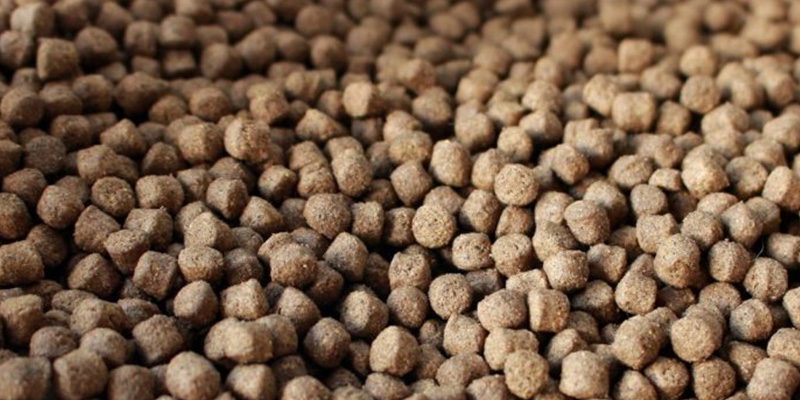
What Are Lime Pellets Good For?
1. The Role of Lime Granules in Agricultural Applications
In agriculture, lime granules are primarily used to improve soil quality and promote crop growth. Their key functions include the following four points:
- Regulating soil pH: This is the most common use in agriculture. Acidic soil (pH < 6.0) can limit nutrient absorption and damage crop root systems. Applying lime granules neutralizes soil acidity, adjusting the pH to a range suitable for crop growth (6.0–7.0) and creating a favorable environment for root development.
- Improving soil structure: It breaks up compacted clay soils, increasing soil aeration and drainage to prevent root rot caused by waterlogging. It also enhances the soil’s nutrient-holding capacity, making nutrients more readily available to crops.
- Increasing forage and crop yields: In pastures and farmlands, lime granules improve the growing environment for forage, enhancing its quality and thereby increasing the nutritional value for livestock; In farmland, they promote the release of nutrients such as phosphorus and calcium from the soil, reducing the use of chemical fertilizers and lowering cultivation costs.
- Suitable for organic farming: As a natural soil conditioner, lime granules contain no synthetic chemicals and fully comply with organic farming requirements. They can partially replace chemical soil conditioners, making them a more environmentally friendly option.
2.The Role of Lime Granules in Industrial Applications
In the industrial sector, lime particles serve as a critical raw material with widespread applications that rely on specialized limestone processing equipment. Their primary uses include:
- Flue Gas Desulfurization (FGD): In facilities such as power plants and chemical plants, lime particles are used to adsorb sulfur dioxide (SO₂) from flue gas, neutralize acidic emissions, reduce air pollution, and help companies meet environmental emission standards.
- Water Treatment: Used in industrial wastewater and municipal sewage treatment, lime particles neutralize acidic wastewater, precipitate heavy metal impurities, purify water quality, and reduce treatment costs.
- Construction and Building Materials: As one of the core raw materials in cement production, limestone particles, after further processing (grinding and calcination), are used to manufacture cement and concrete, enhancing the strength and stability of building materials.
- Mining and Metallurgy: Used to neutralize acidic mine drainage, preventing equipment corrosion, while also aiding in mineral flotation to improve mining efficiency.
Types of Lime: Understanding the Different Types of Lime
To better distinguish between their uses, let’s first clarify the main types of lime. Different types of lime are suitable for different applications, and the corresponding processing equipment also varies:
- Calcium lime: Processed from high-purity limestone (calcium carbonate, CaCO₃), it has a high calcium oxide (CaO) content (30–38%) and is primarily used for neutralizing soil acidity, industrial desulfurization, and cement production. It is the most commonly used type.
- Magnesian lime: Processed from dolomite, it contains both calcium and magnesium. It is suitable for soils deficient in magnesium and industrial water treatment applications, and is used in scenarios requiring simultaneous supplementation of calcium and magnesium.
- Quicklime (calcium oxide, CaO): Produced by high-temperature calcination of limestone, it is highly reactive and is primarily used for industrial desulfurization and wastewater treatment. It can be processed into granular or powdered forms for use.
- Slaked lime (calcium hydroxide, Ca(OH)₂): Produced by reacting quicklime with water, it is typically in powder form and is primarily used for advanced water treatment and soil conditioning. It generates significant dust and requires dust collection equipment.
- Granular lime (the focus of this article): Produced by granulating any of the above types of lime, it is currently the most convenient form for agricultural and industrial use. It can be applied directly or processed further, generates minimal dust, and is easy to store and transport.
Is Pelletized Lime Better Than Powdered Lime?
Advantages of Granular Lime
– Low dust generation: Minimal dust is released during handling and storage, eliminating the need for additional protective measures. This makes it safer for operators and reduces environmental dust pollution.
– Uniform application: Unlike powdered lime, it does not clump or become airborne, preventing waste. This allows for precise dosage control and reduces usage costs.
– More convenient storage and transportation: It can be handled directly using equipment such as belt conveyors and bucket elevators, is less prone to moisture absorption and caking, and is suitable for large-scale, bulk applications.
Advantages of Powdered Lime
Slightly lower cost and faster dissolution rate, making it suitable for small-scale, rapid adjustment scenarios (such as small farm fields or laboratories). However, it generates significant dust, requires dust collection equipment, and is prone to waste, making it unsuitable for large-scale industrial and agricultural use.
The Manufacturing Process for Lime Granules
The production of lime granules involves seven key steps, all of which rely on specialized limestone processing equipment. Each step requires supporting equipment such as dust collection, conveying, and crushing systems. The specific process is as follows:
1. Raw Material Preparation
Limestone (or dolomite) with a purity of ≥90% is selected as the raw material, with impurity content controlled below 5% to ensure lime quality. The raw material is transported to the designated area via a belt conveyor, and a silo-top dust collector is used to minimize dust generation during conveyance, ensuring a clean working environment.
2. Crushing
Use a jaw crusher or impact crusher to crush the raw material into small pieces measuring 10–50 mm, laying the foundation for the subsequent grinding process. The crushing process generates a certain amount of dust; the use of a pulse baghouse dust collector effectively controls dust emissions, meeting environmental production requirements.
3. Grinding (Fine Grinding)
The crushed raw material is fed into a ball mill or vertical mill and ground into a fine powder of approximately 200 mesh (74 μm) to ensure uniform granulation in subsequent stages. As the primary source of dust generation, this process requires dedicated dust collection equipment and is one of the core stages of limestone processing equipment.
4. Mixing and Binding
The fine powder is thoroughly mixed with a small amount of non-toxic, environmentally friendly binding agents (such as lignin or molasses) to ensure the granules do not disintegrate after shaping. The mixed powder is conveyed via a screw conveyor, with dust collection equipment installed throughout the process to prevent dust leakage.
5. Granulation
Using a disc granulator or drum granulator, the mixed powder is formed into uniform granules measuring 2–6 mm. The precision of the granulator directly determines the uniformity and strength of the granules, making this the core step in the production of granulated lime.
6. Drying and Cooling
The moist granules are fed into a rotary dryer to reduce moisture content to 5–10%. They are then cooled in a cooler to ≤100°C to ensure the granules are hard and stable, facilitating subsequent storage and transportation. During the drying and cooling process, the granules are conveyed via a bucket elevator, and dust generated during drying is treated using dust collection equipment.
7. Screening and Packaging
Qualified particles measuring 2–6 mm are separated using a vibrating screen, while fines and oversized particles are removed (unqualified particles can be recovered and re-ground). Finally, the product is packaged and shipped using a packaging machine or bulk handling equipment. During storage, a silo-top dust collector is used to prevent dust dispersion.
Conclusion
Lime granules are a vital raw material for agricultural soil improvement and industrial production. Their manufacturing process relies heavily on specialized limestone processing equipment, while dust collection systems, conveying systems, and crushing and grinding equipment are essential for ensuring efficient and environmentally friendly production. Whether used in agriculture or industry, granulated lime has become the most popular form of lime today due to its convenience and practicality.
 English
  Russian
  French
  Portuguese
  Arabic
  Spanish
  Japanese