In modern cement plants, the material handling and environmental control system is a key part of the production line. It connects all links from raw material input, intermediate processing to finished product output, ensuring compliance with environmental emission standards. A stable, efficient and environmentally friendly system is critical to improving production efficiency and reducing operational costs.
More than 30% of unplanned shutdowns in cement plants are caused by material handling failures (such as conveyor jams, equipment wear). Non-compliance with environmental standards can also lead to production suspension and heavy fines. Therefore, the design, equipment selection and configuration of the material handling and environmental control system directly affect the plant’s operational stability, economic benefits and environmental compliance.
This article details the material handling and environmental control system in cement plants, including process principles, core equipment (cement plant
فلتر كيس, cement plant
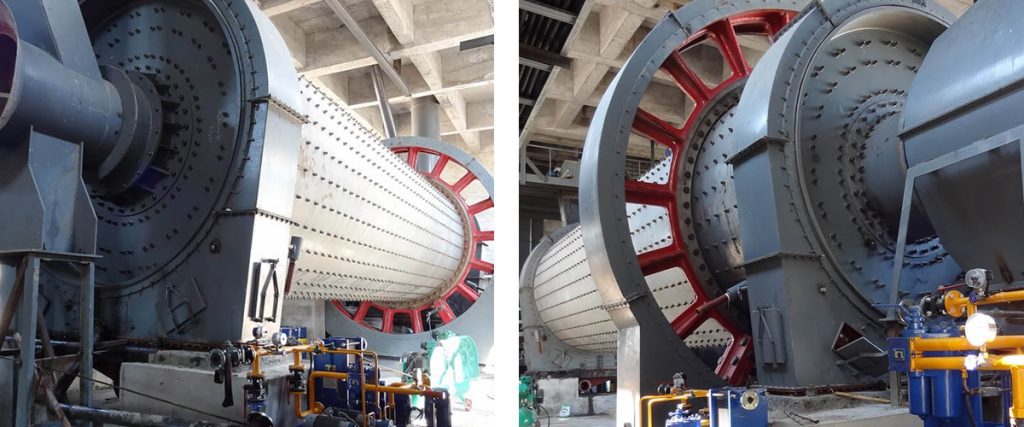
المطحنة الكروية), system matching, key engineering design points, energy-saving optimization and equipment maintenance. It helps cement enterprises master the key points of system construction and equipment use.
What is Cement Plant Material Handling & Environmental Control System?
The material handling and environmental control system is an integrated system in cement production. It is responsible for transporting, transferring and storing various materials (raw materials, fuels, clinker, finished cement) and treating pollutants (dust, waste gas) generated during production. It runs through the entire production process of the cement plant.
A complete modern cement plant material handling and environmental control system usually includes:
Material conveying system (including belt conveyors, screw conveyors, bucket elevators, etc.)
Dust collection system (core equipment: cement plant bag filter, electrostatic precipitators, cyclone dust collectors, etc.)
Waste gas treatment system (denitrification, desulfurization equipment matched with dust collectors)
Material storage and transfer system (silos, transfer stations, etc.)
Intelligent monitoring system for material handling and environmental protection
This system operates continuously under harsh conditions such as heavy load, high dust and variable material properties, directly affecting the stable and environmentally friendly operation of the cement plant.
Key Roles of the System in Cement Production
The material handling and environmental control system plays a vital role in cement production, directly affecting the normal operation of the enterprise.
1. Ensure continuous production. The stable operation of the material conveying system is the premise for continuous production of cement plants. The transportation of raw materials, clinker and finished cement requires stable operation of conveyors and supporting equipment to avoid production interruption caused by material accumulation or transportation failure.
2. Reduce operational costs. A reasonable material handling system can reduce material loss (such as dust emission, material leakage). Efficient conveyors and dust collectors—especially cement plant bag filters—can save energy and reduce the costs of equipment maintenance and environmental governance. For example, energy-saving belt conveyors save 15%-20% more electricity than traditional models. High-efficiency bag filters can minimize dust emissions, avoid environmental fines and reduce maintenance workload.
3. Meet environmental requirements. With increasingly strict environmental policies, the emission standards for dust, NOx, SO2 and other pollutants in cement plants are constantly improved. As the core dust removal equipment, the cement plant bag filter, combined with the waste gas treatment system, can effectively reduce harmful gas emissions, ensuring the enterprise meets production standards and reducing the frequency of environmental equipment maintenance.
4. Improve operational safety. The material handling and environmental control system equipped with intelligent monitoring can timely detect equipment failures (such as conveyor deviation, dust collector blockage) and environmental abnormalities, issue early warnings, avoid safety accidents and protect the safety of personnel and equipment.
Main Components of Modern Cement Plant Material Handling & Environmental Control System
Material Conveying System (Core Equipment: Conveyors)
The material conveying system is a key part of cement plants, responsible for transferring various materials. Belt conveyors and screw conveyors are the most widely used.
Belt conveyors are mainly used for long-distance transportation of bulk materials (such as limestone, clinker, finished cement). They have the advantages of large conveying capacity, stable operation, low energy consumption and easy maintenance. Modern belt conveyors are equipped with intelligent deviation correction, tensioning and monitoring systems to avoid deviation and material leakage, improving conveying stability.
Screw conveyors are suitable for short-distance transportation of powdery materials (such as raw meal, cement). They have a compact structure, small floor space and good airtightness, which can prevent dust emission. They are widely used for material transfer between silos, cement plant ball mills and other equipment, ensuring smooth material supply for ball mills and reducing maintenance caused by material blockage.
Bucket elevators are used for vertical material transportation. They are often used with belt conveyors and screw conveyors to form a complete conveying network, ensuring the smooth circulation of materials in the production line.
Dust Collection System (Core Equipment: Cement Plant Bag Filter)
Dust is a major pollutant in cement production. It is generated in links such as raw material crushing, grinding, material conveying, clinker calcination and cement plant ball mill operation. The cement plant bag filter is the core dust removal equipment, which can effectively capture dust, reduce emission, protect the environment and the health of operators, and reduce maintenance caused by dust accumulation.
At present, the commonly used dust collectors in modern cement plants are bag filters and electrostatic precipitators, which have different applicable scenarios and advantages.
Cement plant bag filters have high dust collection efficiency (up to 99.9% or more), strong adaptability to dust types and concentrations, and simple structure. They are suitable for raw material grinding, cement grinding, material transfer stations and cement plant ball mill supporting dust removal. Their filter bags can be replaced according to service life, with convenient maintenance and stable long-term operation, which is an important equipment for daily maintenance.
Electrostatic precipitators are suitable for scenarios with large air volume and high dust concentration, such as the end of rotary kilns and preheaters. They have the advantages of large air handling capacity, low resistance and low energy consumption, which can effectively collect high-temperature flue gas dust and ensure up-to-standard emission.
In practical application, cement plants usually use bag filters and electrostatic precipitators in combination to achieve comprehensive and efficient dust control. Among them, cement plant ball mill supporting dust removal prefers bag filters, due to their high dust collection efficiency and good adaptability to powdery dust generated by ball mills.
Waste Gas Treatment System (Matched with Dust Collectors)
In addition to dust control, the environmental control system of cement plants also needs to treat waste gas (mainly containing NOx and SO2) to meet ultra-low emission standards. The waste gas treatment system is usually used with dust collectors to form an integrated environmental protection solution.
Selective Non-Catalytic Reduction (SNCR) and Selective Catalytic Reduction (SCR) technologies are commonly used for NOx treatment. After dust removal by dust collectors, the waste gas enters the denitrification system, and reducing agents are injected to reduce NOx to harmless nitrogen and water, achieving emission control.
Limestone-gypsum desulfurization technology is commonly used for SO2 treatment. The waste gas contacts with desulfurizing agents through the absorption tower, converting SO2 into recyclable gypsum, realizing resource utilization of pollutants.
Intelligent Monitoring System (Supporting Cement Plant Maintenance)
Modern material handling and environmental control systems are equipped with intelligent monitoring systems, which are crucial for equipment maintenance. They can real-time monitor equipment operation status (such as conveyor speed, cement plant bag filter pressure, filter bag status, cement plant ball mill operation parameters) and environmental indicators (such as dust concentration, NOx emission concentration).
Through data analysis and early warning, the system can timely detect equipment failures (such as conveyor deviation, bag filter blockage, ball mill wear) and environmental abnormalities, remind staff to handle them in time, and reduce unplanned shutdowns, environmental risks and maintenance costs.


 English
  Russian
  French
  Portuguese
  Arabic
  Spanish
  Japanese