
Idlers are the core load-bearing and key operating components of a belt conveyor. Their performance directly determines the efficiency, stability, and total cost of ownership of the conveying system. In heavy industries such as cement, mining, and ports, proper selection and application of idlers are fundamental to ensuring continuous and efficient production line operation.
What are idlers in a belt conveyor?
Idlers are cylindrical rotating parts used to support the conveyor belt and materials on a belt conveyor. They are widely installed on the carrying side and return side of the conveyor. As the most widely used and numerous general components on the conveyor, idlers undertake the core functions of support, guidance, and stabilization.
What is the purpose of an idler?
The main purpose of an idler is to support the weight of the conveyor belt and materials, reduce running resistance and belt wear, prevent belt misalignment and tearing, and ensure stable, low-energy, and continuous operation of the conveying system. It directly affects the efficiency and service life of the entire production line.
Core Functions and Classification of Idlers
The main functions of idlers are to support the conveyor belt and material load, guide the belt to run smoothly, and minimize running resistance and wear. According to their position and function on the conveyor, they can be divided into the following categories:
1.Trough Idlers
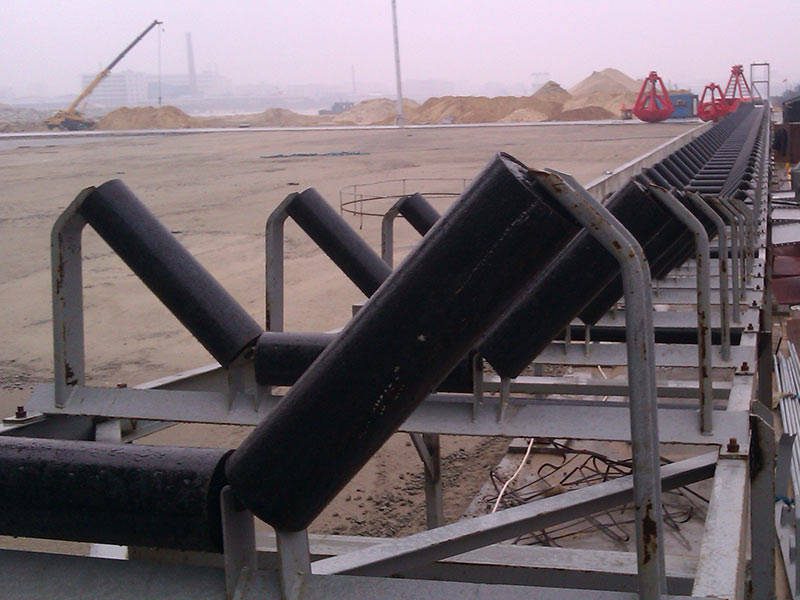
Mainly used on the carrying side. They usually consist of 3 rolls (35° or 45° trough angle) or 5 rolls, forming a trough shape to increase loading capacity and prevent material spillage. This is the most commonly used type.
2.Flat Idlers
Including flat top idlers (for bulk materials or unit goods) and flat return idlers (for supporting the empty belt on the return run). Flat return idlers are often referred to as return idlers.
3.Training Idlers
4.Impact Idlers
5.Comb and Spiral Idlers
For example, transition idlers allow the flat belt to gradually change to a trough shape or return smoothly to flat, preventing material spillage. Impact idlers reduce impact at the feeding point, lowering belt damage and extending service life. Training idlers correct belt misalignment in belt conveyors.
Conclusion
Idlers are small in size and simple in structure, but they are irreplaceable core components of a belt conveyor. They perform multiple functions including support, guidance, resistance reduction, cushioning, alignment, and cleaning. They directly influence conveyor stability, energy consumption, belt life, and the continuous operation of the entire production line.
In heavy-duty conditions such as mining, cement, and ports, choosing high-quality and well-matched idlers effectively reduces failure rates, cuts maintenance costs, improves conveying efficiency, and is essential for reliable long-term operation of the conveying system.

 English
  Russian
  French
  Portuguese
  Arabic
  Spanish
  Japanese