
1. Comment choisir un tissu adapté aux glissières pneumatiques (critères de sélection essentiels)
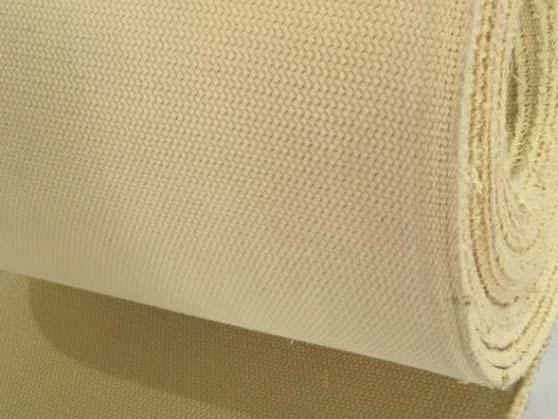
Adapté tissu pour glissière pneumatique doivent correspondre aux caractéristiques du matériau et aux conditions de travail sur site. Un choix arbitraire entraîne facilement un colmatage prématuré, un durcissement et des fuites d'air. Les entreprises doivent se concentrer sur quatre indicateurs clés lors de la sélection.
1.1 Résistance aux matériaux et à la température
Les tissus en polyester et en polypropylène constituent les deux matériaux les plus couramment utilisés pour les toiles de glissières à air industrielles. La toile de glissière à air en polyester offre une résistance élevée à la traction et une excellente résistance à l'usure. Elle conserve des performances stables jusqu'à 120 °C et s'adapte à la plupart des applications de transport de poudres, notamment la poudre de ciment, les cendres volantes et les poudres chimiques courantes. Le tissu pour glissière à air en polypropylène se caractérise par une meilleure résistance à l’humidité et à la corrosion, ce qui le rend adapté aux ateliers humides et aux matériaux légèrement corrosifs. Dans des conditions de travail à haute température, un tissu pour glissière à air sur mesure, résistant aux hautes températures, empêche efficacement la déformation des fibres et les défaillances de perméabilité.
1.2 Perméabilité à l'air et uniformité des pores
Une perméabilité à l'air stable constitue la caractéristique essentielle d'une toile pour glissière à air conforme aux normes. Des micropores uniformes garantissent un flux d'air constant sur toute la section de la goulotte. Cette conception permet une fluidisation optimale des matériaux en poudre et évite toute accumulation locale de matière. Un tissu de mauvaise qualité présente une répartition désordonnée des pores, ce qui entraîne une aération inégale, un écoulement pulsatoire du produit et une capacité de transport réduite. Optez toujours pour un tissu pour glissière à air testé en milieu industriel et présentant une perméabilité stable afin de garantir un fonctionnement stable à long terme.
1.3 Résistance à l'usure et performances anti-colmatage
Le frottement prolongé des matériaux et la pénétration de fines poussières usent progressivement et obstruent les toiles de glissières pneumatiques classiques. Les toiles pour glissières à air de haute qualité bénéficient d’un tissage à haute densité et d’un traitement de surface anti-colmatage professionnel. Elles empêchent efficacement l’incrustation de poussières fines et réduisent la fréquence des nettoyages quotidiens. Pour les matériaux hautement abrasifs tels que la farine brute et les poudres minérales, il est recommandé de choisir des toiles pour glissières à air plus épaisses et renforcées afin d’améliorer la résistance à l’usure et de prolonger la durée de vie.
1.4 Taille et adaptabilité structurelle
Veillez à choisir la largeur et l'épaisseur du tissu en respectant strictement les spécifications du modèle de convoyeur à glissière pneumatique concerné. Privilégiez les toiles pour glissières pneumatiques dotées de bords renforcés et de marges d'installation prévues à cet effet. Cette structure facilite le réglage ultérieur de la tension et la mise en étanchéité, et empêche efficacement les déchirures au niveau des bords ainsi que les fuites d'air.
2. Procédure standard d'installation d'une toile Air-slide
Même un tissu de glissière pneumatique haut de gamme ne peut pas fonctionner correctement s’il n’est pas installé correctement. Une tension déséquilibrée, une étanchéité insuffisante et des dommages localisés constituent les erreurs d’installation les plus fréquentes. Les étapes standardisées suivantes garantissent des résultats d’installation fiables.
2.1 Inspection et nettoyage avant l'installation
Nettoyez soigneusement la goulotte à coussin d'air avant son installation. Éliminez les scories de soudure, la rouille et les débris durs afin d'éviter que des objets pointus ne rayent ou ne perforent la toile. Vérifiez la planéité de la base d'installation et éliminez les irrégularités en relief afin d'éviter toute concentration locale de contraintes et tout endommagement de la toile.
2.2 Pose et réglage de la tension
Dépliez la toile du conduit d'air à plat, sans plis ni décalage. Veillez à ce que toute la surface de la toile soit plane et soumise à une tension uniforme. Maintenez une tension modérée pendant l'installation. Une tension excessive entraîne à long terme une fatigue des fibres et leur rupture. Une tension insuffisante provoque un affaissement de la toile, une accumulation de matière et un flux d'air instable. Assurez-vous que la toile recouvre entièrement la zone de ventilation, sans zones mortes.
2.3 Traitement de fixation et d'étanchéité des bords
Fixez les bords de la toile de manière uniforme à l'aide de bandes de pression et de vis professionnelles afin d'éviter que les bords ne se détachent et de prévenir les fuites d'air. Renforcez l'étanchéité au niveau des raccords à bride, des portes d'accès et des joints à recouvrement de la toile. Une étanchéité parfaite garantit que tout l'air circule à travers la toile pour assurer la fluidisation du matériau, réduit les pertes d'air inutiles et améliore le rendement énergétique global du système de convoyeur à glissière pneumatique.
2.4 Protection sur site pendant l'installation
Il est interdit de procéder à des travaux de soudure ou d'oxycoupage à proximité du tissu du convoyeur pneumatique mis en place. Les projections de scories de soudure brûlent les structures fibreuses et provoquent l'apparition de minuscules trous à l'origine de fuites. Installez des plaques de protection au niveau de l'entrée d'alimentation afin de réduire l'impact direct du matériau et d'éviter l'usure locale du tissu.
3. Fréquence de remplacement et méthodes standard pour les toiles de glissière à air
La toile du convoyeur à glissement pneumatique est une pièce d'usure consommable. Le frottement prolongé du matériau, l'encrassement par la poudre et l'impact de la pression d'air affaiblissent progressivement les performances de fluidisation. Un remplacement en temps opportun est essentiel pour garantir un fonctionnement stable du convoyeur à glissement pneumatique. Vous trouverez ci-dessous les critères d'évaluation et les procédures de remplacement standard.
3.1 Signes de défaillance nécessitant un remplacement immédiat
Remplacez immédiatement votre toile de glissière pneumatique dès l'apparition des problèmes suivants. Premièrement, la vitesse de transport du matériau et le débit diminuent de manière évidente, alors qu'aucun dysfonctionnement n'est constaté au niveau du ventilateur ou de la canalisation. Deuxièmement, la pression d'air du système devient instable et des stagnations locales de matériau se produisent fréquemment à l'intérieur de la goulotte. Troisièmement, la surface de la toile se durcit et s'encrasse fortement ; elle ne peut pas retrouver son état initial après nettoyage, ou présente des déformations et des fissures irréversibles. Quatrièmement, un flux d'air irrégulier entraîne une aggravation des fuites de poussière au niveau des raccords de l'équipement.
3.2 Procédure standard de remplacement
Suivez la procédure de remplacement standard pour installer la nouvelle toile de glissière pneumatique de manière sûre et correcte. Tout d’abord, arrêtez complètement le convoyeur à glissière pneumatique et coupez toute alimentation électrique et en air comprimé afin de garantir une sécurité totale sur le chantier. Nettoyez soigneusement les résidus de poudre et les débris à l’intérieur de l’auge du convoyeur afin d’éviter tout débordement de poussière et toute pollution environnementale pendant le remplacement. Ensuite, retirez les anciennes bandes de pression, les boulons de fixation et la toile usée du convoyeur pneumatique. Une fois ces éléments retirés, nettoyez à nouveau la base de montage et inspectez la structure de la goulotte afin de détecter toute déformation, trace de rouille ou arête vive susceptible d’endommager la nouvelle toile. Troisièmement, étalez la nouvelle toile du convoyeur pneumatique de manière uniforme sur la surface de la goulotte, ajustez la tension de façon homogène pour éviter tout affaissement ou étirement excessif, puis fixez solidement les bords à l’aide des bandes de pression et des boulons. Effectuez tous les travaux d’étanchéité au niveau des chevauchements et des points de raccordement afin d’éliminer toute fuite d’air potentielle. Enfin, effectuez d’abord un essai de ventilation à vide pour vérifier l’uniformité du flux d’air, puis réalisez un essai de transport de matière. Ce n’est qu’après avoir confirmé la stabilité du flux d’air, la fluidisation régulière de la matière et l’absence de fuite de poussière que l’équipement pourra être mis en production officielle.
4. Conseils d'entretien quotidien pour prolonger la durée de vie des toiles des toboggans gonflables
Un entretien quotidien rigoureux retarde le vieillissement et l'encrassement du tissu et réduit les coûts de remplacement à long terme. Inspectez régulièrement la surface de la toile pour détecter toute trace d’usure, de déchirure ou de durcissement. Nettoyez régulièrement la poussière présente à la surface à l’aide d’outils souples. N’utilisez jamais d’outils tranchants pour gratter la toile, car cela détruit la structure tissée et accélère la perte de perméabilité. Pour les équipements mis hors service à long terme, nettoyez et séchez entièrement la toile du glisseur à air afin d’éviter l’absorption d’humidité, la formation de moisissures et toute contamination secondaire.
5. Conclusion
La toile des glissières pneumatiques constitue l’élément central qui assure une fluidisation efficace et un fonctionnement stable des convoyeurs à glissières pneumatiques. Un choix judicieux, une installation conforme aux normes et un remplacement en temps opportun sont les trois facteurs clés qui garantissent les performances de l’équipement. Le choix d’une toile adaptée aux conditions de travail, la prévention des erreurs d’installation et la mise en œuvre d’un entretien régulier permettent d’améliorer efficacement l’efficacité du transport des poudres, de réduire les taux de défaillance des équipements et de diminuer les coûts d’exploitation et d’entretien à long terme pour les entreprises de manutention de matériaux en vrac.
 English
  Russian
  French
  Portuguese
  Arabic
  Spanish
  Japanese