
High temperature filter bags and cartridges are the single most important component in any baghouse or cartridge dust collector handling hot flue gas. Choose the wrong media and you get filter bags that scorch, plug, or fail in a matter of weeks — even when the collector itself is fine.
This guide walks you through five steps: your emission target, operating temperature, gas chemistry and dust character, filtration velocity, and collector hardware. Work through them in order and you can pick high temperature filter bags that last years instead of months.
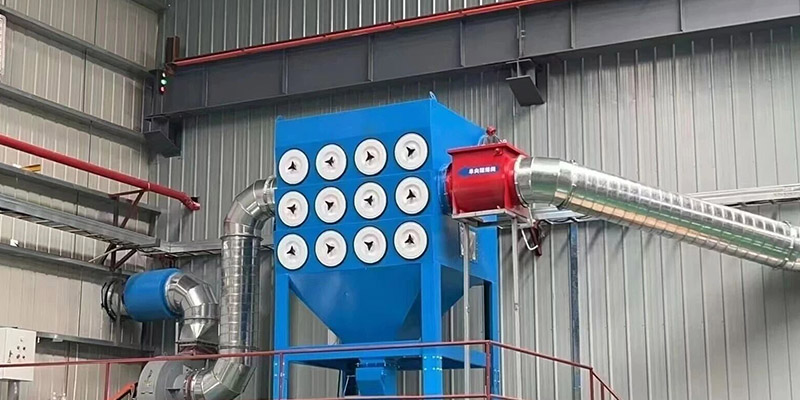
What Are High Temperature Filter Bags and Cartridges?
High temperature filter bags and cartridges are filtration elements made from heat-resistant synthetic, glass, or metal fibers and rated for continuous use above roughly 120 °C. Common materials include PPS (polyphenylene sulfide), aramid (Nomex), P84 (polyimide), PTFE, fiberglass, and — for extreme heat — stainless steel metal fiber and ceramic.
They are used across asphalt mixing plants, cement kilns, industrial boilers, waste incinerators, smelting furnaces, and heat-treatment lines. The same logic for selecting high temperature filter bags applies to filter cartridges; only the geometry and cleaning system differ.
A quick caution before we start: the temperature bands below are reference ranges, not hard rules. Always finalize a choice against your actual gas chemistry, moisture, and emission limit.
Step 1. Start With Your Emission Target
This is the decision most buyers skip — and it is the one that determines whether you can use plain needle felt or must buy membrane media.
Ultra-low emission (PM ≤ 10 mg/Nm³, sometimes ≤ 5 mg/Nm³): you essentially need surface filtration — PTFE-membrane-laminated, fiberglass with PTFE membrane, or metal fiber media. Plain needle felt captures dust in the depth of the fabric; it may pass the test early on but drifts out of compliance as the fabric loads.
Basic compliance (PM ≤ 30 mg/Nm³ range): you have more room. Standard PPS, aramid, or fiberglass needle felt can work, chosen on temperature and operating cost.
Visual plume, ammonia slip, or corrosion margin concerns: build in extra media grade so you are not replacing bags prematurely.
In short: if your permit is strict, membrane media is not optional — it is the starting point.
Step 2. Select Filter Media by Operating Temperature
120–190 °C (Medium Range) — Most Common
Dryer lines, asphalt plants, small boilers, casting and heat-treatment shops.
PPS needle felt — the value pick. Continuous 160–180 °C, surge to 190–210 °C. Excellent resistance to weak acids and hydrolysis, and it handles water vapor well — the standard choice for sulfur-bearing flue gas. Avoid it where ozone or strongly oxidizing gas is present.
Aramid (Nomex) — the alternative. Continuous 200 °C, surge to 230 °C. Very tough and abrasion-resistant, ideal for dry, hot, mildly alkaline dust such as cement and foundry sand. Not suited to strong acid or high humidity.
Collector notes: insulate the casing, use high-temperature silicone seals on access doors, specify high-temperature cylinders and pulse valves, and add an air dryer to keep moisture out of the cleaning air.
190–250 °C (High Range) — Incinerators, Metallurgy, Kiln Exhaust
P84 (polyimide). Continuous 240 °C, surge 260 °C. Its trilobal fiber cross-section gives high dust-holding capacity and easy cleaning, and it resists acids and alkalis — a strong fit for moist incineration gas. Note that long service in hot, high-moisture gas accelerates hydrolysis.
PTFE-membrane composite — the long-life high-temperature standard. Continuous 260 °C, short-term 280 °C. Resists strong acids, strong alkalis, and organic solvents, and dust does not stick. This is the default for ultra-fine, sticky, hot dust such as incinerator fly ash and chemical fumes. Surface filtration means less plugging and helps hit ultra-low emission.
Fiberglass with PTFE membrane. Long-term 250–260 °C and lower cost with excellent heat resistance. Fiberglass is brittle and dislikes repeated flexing, so keep pulse-cleaning pressure moderate. Best for dry, low-abrasion kiln gas.
260–500 °C (Ultra-High Range) — Smelting, Quenching, High-Temperature Kilns
Synthetic fiber media are not usable here. Choose 316L stainless steel metal fiber cartridges: long-term 450–500 °C, wear-resistant, washable and reusable (mind the cleaning conditions and pressure-drop recovery), with alloy grades for acidic or alkaline service. Above 500 °C, select ceramic filter elements — excellent heat tolerance but brittle and sensitive to vibration and thermal shock, so pay close attention to gas distribution and temperature gradients.
Upstream, add an air- or water-cooling duct to bring gas below 500 °C before it enters the collector. This is a real engineering trade-off: if you can cool reliably, cool first and use conventional media; only move to metal or ceramic when cooling cannot be made stable.
Intermittent Temperature Surges
For streams that spike repeatedly, use a PPS or PTFE substrate with ePTFE membrane and fit an emergency cold-air mixing valve at the collector inlet. When the temperature rises, the valve bleeds in cold air automatically to protect the media from instantaneous scorching.
Step 3. Match Media to Gas Chemistry and Dust Character
Temperature alone is not enough. The same media can be perfect in one flue gas and dead in a month in another.
Acid gas (SO₂, HCl, pickling exhaust): drop PPS and aramid. Go to PTFE membrane or fiberglass membrane — PPS ages and fails fast in strongly acidic gas.
High humidity, high dew point, condensation risk: choose water-and-oil-repellent media with PTFE membrane, insulate the full casing, and heat-trace the hopper so condensation never wets the bag surface and cakes it closed.
Sticky, high-temperature dust (resin, asphalt fume): membrane is mandatory; plain needle felt lets dust migrate deep into the fabric where cleaning cannot reach it. Drop filtration velocity to 0.4–0.6 m/min.
Flammable or explosive dust (aluminum or magnesium powder, coal dust): add an anti-static coating on the heat-resistant substrate, ground the whole collector, and fit explosion-relief valves.
Step 4. Set Filtration Velocity and Control Pressure Drop
Filtration velocity is the parameter buyers ignore most — yet it drives both bag life and plugging. Think of it as how fast gas is pushed through the fabric.
Condition | Recommended velocity (m/min) |
Ambient temperature, normal dust | 1.0–1.5 |
High temperature, normal dust | 0.6–1.0 |
High temperature, ultra-fine or sticky dust | 0.4–0.6 (with membrane) |
Membrane surface filtration | Can run slightly higher than felt at same duty |
Once the velocity is set, back-calculate the filter area you need: airflow ÷ filtration velocity = filter area. That tells you how many bags or cartridges the collector must hold — don’t size it “big enough to fit” but “big enough to run.”
Step 5. Upgrade the Collector Body and Auxiliaries
Cages / frames: above 200 °C, skip galvanized steel and use stainless 304/316 so the frame does not rust or distort.
Seals: replace all access-door and tube-sheet seals with high-temperature silicone rubber. Ordinary rubber softens around 80 °C, leaks air, and lets in moisture.
Pulse-jet air supply: high-temperature air carries water. Add an air receiver and a refrigerated dryer so compressed air never condenses inside the bags.
Monitoring: fit a differential-pressure gauge and an over-temperature alarm (tied to cold-air mixing or bypass), and periodically check outlet emission to confirm bag health.
High Temperature Filter Bags and Cartridges: Quick-Reference Table
Operating temperature | Recommended media | Best when | Avoid when |
120–190 °C | Acid, moist, sulfur gas | Oxidizing gas | |
120–200 °C | Aramid (Nomex) | Dry, abrasive, alkaline dust | Strong acid, high humidity |
190–250 °C | Hot, moist gas, fine dust | Prolonged high moisture + heat | |
190–260 °C | PTFE membrane | Ultra-low emission, sticky or corrosive dust | Cost-sensitive, mild duty |
250–260 °C | Fiberglass membrane | Dry, low-abrasion kiln gas, budget | Flexing, high abrasion |
260–500 °C | 316L metal fiber | Smelting, quenching, reusable | Where cooling is practical instead |
>500 °C | Ceramic | Extreme heat | Vibration, thermal shock |
High Temperature Filter Bags: Frequently Asked Questions
What is the best material for high temperature filter bags?
It depends on temperature, gas chemistry, and emission limit. PPS suits acidic, sulfur-bearing gas up to ~190 °C; aramid suits dry abrasive dust; P84 and PTFE take over to 260 °C; metal fiber and ceramic cover 260–500 °C and beyond.
How hot can filter bags operate?
PPS runs to ~190 °C continuous, aramid to ~200 °C, P84 to ~240 °C, PTFE and fiberglass to ~260 °C, and metal fiber to 450–500 °C. Always leave a margin of at least 20 °C above your highest expected operating temperature.
Why do my high temperature filter bags fail so quickly?
The usual causes are temperature excursions above the media rating, chemical attack (especially acid), condensation and mudding at high humidity, excessive filtration velocity, and overly high pulse pressure on brittle fiberglass media.
Are PTFE membrane filter bags worth the extra cost?
For ultra-low emission permits or sticky, corrosive dust, yes — surface filtration keeps outlet dust low and prevents plugging, which usually pays back in longer bag life and fewer shutdowns.
Can I use the same media for a cartridge as for a bag?
Yes. The selection logic — temperature, chemistry, dust, velocity — is identical; only the cartridge geometry and cleaning system differ.
Conclusion
Choosing high temperature filter bags and cartridges does not have to be a gamble. Start with your emission target, pick media within the right temperature band, verify it against gas chemistry and dust character, set a sensible filtration velocity, and upgrade the collector hardware that protects it. Work through the five steps and you will buy media that survives the heat — not just survives the first week.
Need a media recommendation matched to your exact flue gas? Contact our engineers with your temperature, gas analysis, and emission limit, and we will spec the right high temperature filter bag or cartridge for your process.
 English
  Russian
  French
  Portuguese
  Arabic
  Spanish
  Japanese