7 Essential Baghouse Dust Collector Wear Parts & Replacement Components

はじめに

インダストリアル バッグハウス集塵機 are the backbone of air pollution control for cement plants, steel mills, activated carbon factories, biomass power plants, and other heavy-duty production facilities. Most factory managers focus primarily on the main dust collector body while overlooking consumable wear parts that directly determine system efficiency, emission compliance, and operational stability.
Even a well-designed baghouse will suffer from rising pressure drop, incomplete ash cleaning, dust leakage, and unexpected shutdowns if key components age or mismatch the working conditions. Unlike generic maintenance articles that only cover top-side cleaning parts, this guide summarizes seven core wearable components covering the upper filtration system, pulse cleaning system, detection control system, and bottom ash discharge system. It provides complete selection standards, service life judgment, and failure prevention tips to help plant operators reduce maintenance costs and extend equipment lifespan.
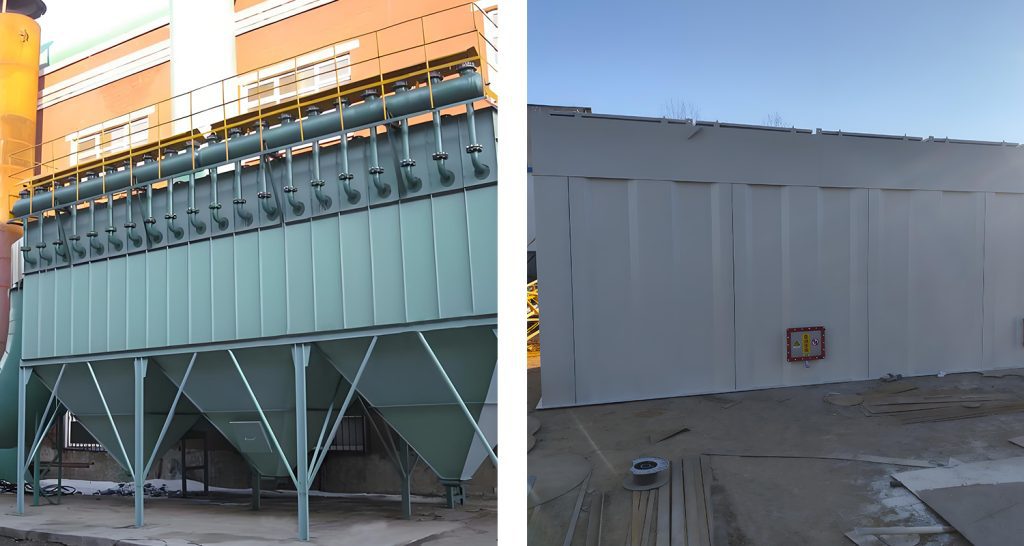
オフラインパルスジェットバッグハウスフィルターは、そのチャンバーデザインと集塵能力を産業環境において紹介しています。

Why Wear Parts Directly Affect Baghouse Overall Performance

A pulse-jet baghouse dust collector operates through the coordination of filtration, pulse injection, airflow distribution, differential pressure monitoring, and ash discharge. Every wearable component is a critical link in the entire dust removal loop.

Damaged or aging spare parts do not merely cause local failures — they break the overall system balance. Worn filter bags reduce filtration accuracy, failed pulse valves weaken cleaning power, misaligned blow pipes cause localized bag abrasion, and faulty discharge valves lead to ash accumulation and system blockage.
Scheduled inspection and targeted replacement of vulnerable parts is the most cost-effective industrial maintenance strategy to maintain stable air filtration efficiency and meet environmental emission standards year-round.

7 Critical Wear & Replacement Parts for Baghouse Dust Collectors

1. Dust Collector Filter Bags

フィルターバッグ are the most fundamental and high-cost consumables of baghouse dust collectors. Made of woven fabric or needle-punched felt, they intercept fine, dry, non-fibrous industrial dust and separate particulate matter from polluted airflow.
The actual service life of filter bags usually ranges from 1 to 3 years under standard operating conditions. Extreme environments including high-temperature flue gas, corrosive ingredients, sticky dust, and highly abrasive particles will drastically shorten service life and cause premature bag breakage or blinding.
Proper material selection based on working conditions is essential:
  • Polyester Bags: Ideal for normal-temperature flue gas below 130°C and conventional industrial dust.
  • PPS Bags: Suitable for 160°C flue gas, widely used in coal-fired and power industry environments.
  • Aramid Nomex Bags: Applied for ultra-high-temperature kiln working conditions up to 204°C.
  • P84 Bags: Excellent abrasion resistance for cement clinker and heavy abrasive dust.
  • PTFE Membrane Bags: Anti-caking, waterproof, and oil-resistant for sticky, moisture-prone dust.
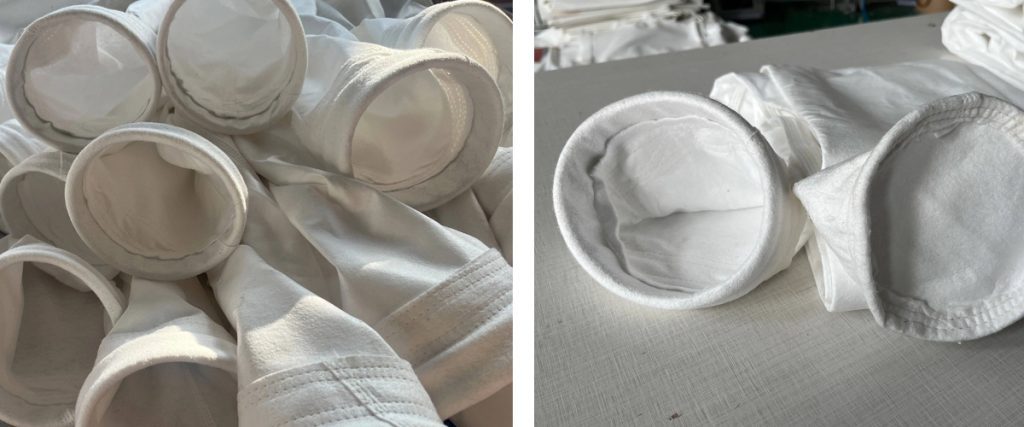
PTFEフィルターバッグを工業用環境で展示 - 効率的なろ過のための素材と設計を強調するクローズアップビュー

2. Filter Bag Cages

Filter bag cages act as supportive skeletons to prevent filter bags from collapsing, deforming, or sticking together under negative pressure. Cage quality and surface treatment directly determine the wear degree and overall service life of filter bags.
Common manufacturing materials include galvanized low-carbon steel wire, 304 stainless steel, and 316 stainless steel. Multiple shapes are available such as round, oval, star-shaped, ladder-shaped, and customized structures according to equipment specifications.
Poorly welded cages with burrs or uneven galvanized layers continuously rub against filter media, forming tiny holes and causing dust leakage. High-precision, smooth anti-corrosion cages effectively reduce friction damage and greatly extend filter bag service life.

3. Perforated Tube Sheets

Tube sheets, also known as flower plates, are thick steel partition plates with standardized holes for installing and fixing filter bags. The hole diameter, hole spacing, and overall layout directly affect internal airflow distribution and operational safety.
Uniform hole arrangement is commonly adopted for medium-sized pulse-jet dust collectors, while staggered distribution is more suitable for large-capacity baghouses. Unreasonable hole spacing leads to uneven airflow impact, resulting in partial filter bag abrasion, local overloading, and increased system resistance.
Although tube sheets are not frequently replaced, unreasonable design and long-term airflow scouring will cause accelerated component aging and hidden equipment failures.

4. Pulse Jet Solenoid Valves & Rubber Diaphragms

Pulse solenoid valves are the core power components of the pulse cleaning system, responsible for releasing instantaneous high-pressure airflow to blow off surface dust on filter bags. The mainstream types include right-angle, submerged, and straight-through pulse valves.
Most equipment failures are not caused by valve body damage but by aging rubber diaphragms. Long-term air impact, oil pollution, and moisture erosion easily lead to diaphragm cracking, air leakage, and insufficient pulse force. Weak ash cleaning results in continuous rising differential pressure and severe bag blinding.
Regular replacement of diaphragm repair kits can effectively reduce maintenance costs without replacing the entire valve assembly.

5. Blowpipes

Blowpipes are seamless pressure-resistant tubes equipped with precision nozzles, arranged directly above filter bag openings to ensure uniform pulse injection. The cleaning efficiency largely depends on nozzle quantity, nozzle diameter, and vertical distance from the bag mouth.
Industry-standard optimized parameters include fewer than 18 nozzles per pipe, nozzle diameters ranging from 8mm to 32mm, and a vertical installation distance of 200mm to 400mm from the bag opening.
Offset nozzles or uncalibrated blowpipes cause concentrated airflow impact, resulting in local filter bag damage, uneven dust cleaning, and increased system operating resistance.

6. Differential Pressure Monitor & Pulse Control System

The differential pressure gauge and pulse control timer form the intelligent monitoring and scheduling core of the baghouse system. The differential pressure value intuitively reflects the clogging degree of filter bags, serving as the earliest warning signal for maintenance arrangement.
The pulse controller adjusts injection frequency, pulse width, and cleaning intervals. Unreasonable parameter settings will either cause excessive cleaning fatigue damage or insufficient cleaning leading to dust accumulation and bag hardening.
These low-cost control components play an irreplaceable role in realizing predictive maintenance and avoiding blind over-maintenance or under-maintenance.

7. Rotary Airlock Discharger (Ash Discharge Valve)

The rotary airlock discharger, also called the star-type ash discharge valve, is the core wearable component of the bottom ash discharge system, which most maintenance guides ignore. It is responsible for quantitative and continuous dust discharge while isolating external air to prevent air leakage that damages internal negative pressure balance.
Long-term dust scouring causes abrasion on impeller blades, sealing gaskets, and bearings. Common failures include stuck rotation, ash leakage, air infiltration, and motor overload operation. Poor ash discharge efficiency leads to dust bridging, hopper accumulation, increased overall resistance, and even system shutdown.
Multiple types are available including standard-type, high-temperature resistant, wear-lined, and explosion-proof rotary valves, adapting to complex working conditions in cement production, steel metallurgy, and biomass combustion industries. Regular replacement of wearing seals and worn blades ensures stable and continuous dust discharge.

Practical Maintenance Strategies to Extend Component Lifespan

  • Implement quarterly systematic inspection for bags, cages, pulse valves, blowpipes, and discharger components to realize batch replacement rather than emergency repair.
  • Keep compressed air dry and oil-free to protect diaphragms and prevent filter bag condensation and adhesion.
  • Calibrate blowpipe nozzle positions regularly to avoid eccentric airflow scouring.
  • Check the tightness and abrasion of the rotary discharger seal frequently to maintain stable negative pressure inside the dust collector.
  • Adjust maintenance cycles dynamically according to dust abrasiveness, temperature, and humidity of different production lines.

Common Causes of Premature Part Failure

Most wearable parts fail ahead of service life due to system mismatch rather than quality problems:
  • Improper filter media selection for high-temperature, corrosive, or sticky flue gas
  • Rough cage surface causing continuous filter bag friction damage
  • Uncalibrated blowpipe parameters leading to uneven pulse injection
  • Overhigh pulse pressure accelerating component fatigue aging
  • Neglected discharger wear resulting in internal dust accumulation and system blockage

結論

A complete baghouse dust collector system includes upper filtration components, pulse cleaning components, monitoring control parts, and bottom ash discharge components. Scientific selection, regular inspection, and standardized replacement of the seven core wear parts can effectively avoid unplanned downtime, stabilize exhaust emission standards, and minimize long-term operational and maintenance costs.
We provide full-series customized baghouse spare parts including filter bags, filter cages, pulse solenoid valves, blowpipes, tube sheets, and rotary airlock discharge valves. Our professional engineering team offers condition-based selection solutions and bulk competitive pricing for industrial dust collector maintenance.

下記フォームよりお気軽にお問い合わせください。24時間以内にご返信いたします。

* 名前:
国 :
* 電子メール:
Tel :
メッセージ :