How to Choose the Right Bucket Elevator for Bulk Material Conveying?

In bulk material vertical conveying equipment, the バケットエレベーター is the most widely used workhorse. Grain processing, building materials, cement, mining and chemical production lines all rely heavily on this vertical conveyor. However, bucket elevators are not one-size-fits-all solutions. They come with outstanding strengths as well as obvious operational limitations. This practical guide breaks down bucket elevator advantages, drawbacks, suitable working scenarios and critical selection pitfalls in plain, industry-focused language, accessible for field engineers, purchasing managers and factory owners alike.

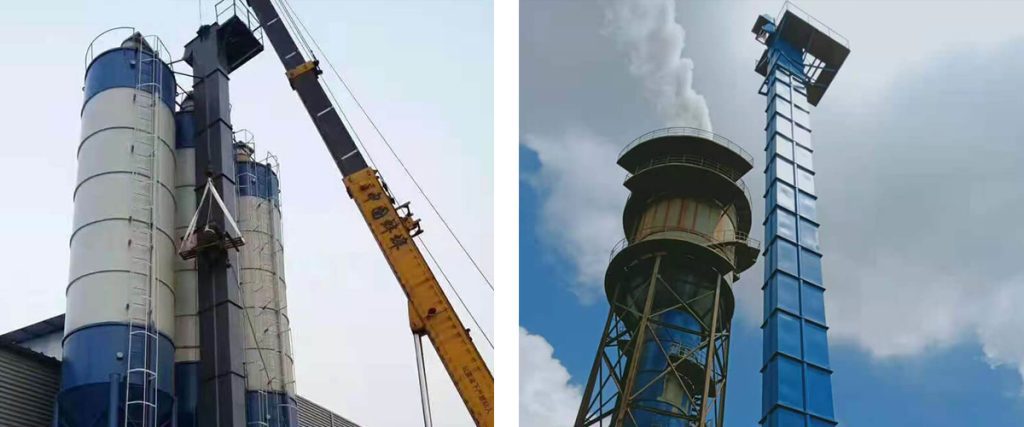
穀物貯蔵施設のバケットエレベーター - サイロを背景に原料を運搬する垂直コンベアシステム

1. What Is a Bucket Elevator?

A bucket elevator, also called a bucket lift, is a vertical conveying machine that lifts powder, granular and lump materials vertically via buckets fixed on belt or chain traction systems. It features a compact footprint, large lifting height and fully sealed housing, making it standard equipment for silos, workshop production lines and multi-layer processing plants.

Three mainstream industrial models cover all working conditions: TD belt bucket elevator, TH ring chain bucket elevator and NE plate chain bucket elevator, each designed for unique material and temperature requirements.

2. Core Advantages of Bucket Elevators

  • Ultra-small footprint for vertical transport
    Compared with belt conveyors and screw conveyors, bucket elevators occupy minimal floor space under the same lifting height. It is the top pick for factories with limited ground area and multi-layer feeding demands, boasting unmatched space utilization efficiency.
  • Wide range of lifting height and conveying capacity
    Standard bucket elevators support lifting heights from 10m to 40m, while heavy-duty NE plate chain models can reach up to 80m. Hourly throughput ranges from 3 m³ to over 1000 m³, covering small batch workshops and large-scale continuous production lines.
  • Fully enclosed structure for dust-free, eco-friendly operation
    The fully sealed metal shell prevents material spillage and dust leakage during operation, helping factories pass environmental compliance inspections easily. The closed housing also shields raw materials from moisture and external contamination.
  • Low energy consumption to cut long-term operational costs
    Adopting inflow feeding and induced discharging design, bucket elevators generate nearly no material backflow or digging waste, minimizing idle power loss and lowering electricity expenses for long-term continuous running.
  • Stable operation with extended service life
    High-quality bucket elevators deliver more than 20,000 hours of trouble-free operation. Wear parts are limited to buckets, traction belts or chains, with affordable replacement costs and simple daily maintenance procedures.
  • Broad compatibility with diverse materials
    It handles dry grain, cement, sand, coal, chemical pellets, plastic particles and other powdery, granular and small lump bulk materials seamlessly.

3. Drawbacks & Limitations of Bucket Elevators

  1. Highly sensitive to overloading and uneven feeding
    Steady, uniform feeding is mandatory. Sudden massive material input will cause blockages, burnt drive motors and broken traction chains, leading to costly unplanned downtime.
  2. Strict restrictions on material characteristics
  • Not suitable for highly sticky, damp or clumping materials that stick to bucket inner walls and trigger frequent jams
  • Poor performance with oversized, sharp, highly abrasive lumps that accelerate wear and raise material breakage rates
  • Not recommended for materials with extremely poor flowability that compact easily
  1. Cumbersome maintenance once malfunctions occur
    The vertical fully enclosed structure complicates internal repairs for blockages, chain breakage or bucket detachment. Full production line shutdown and shell disassembly are required for troubleshooting, disrupting continuous manufacturing.
  2. Risk of material fragmentation during conveying
    High-speed material throwing and bucket collision against the casing will create minor breakage for fragile materials such as grains and food pellets, failing applications with strict intactness requirements.
  3. High standards for installation verticality and foundation stability
    Taller lifting heights demand stricter vertical alignment and load-bearing base construction. Improper installation leads to swinging, chain deviation and persistent abnormal noise.

4. Ideal Working Conditions for Bucket Elevators

  • Vertical feeding required with limited workshop floor space
  • Production lines for grain & feed, cement & building materials, mining sand, chemical powder
  • Strict environmental standards requiring zero dust emission
  • Stable production output with consistent feeding volume and high lifting height demands
  • Dry, free-flowing materials with low viscosity and abrasion

5. Unsuitable Scenarios to Avoid Bucket Elevators

  • Wet sludge, highly adhesive or heavily agglomerated raw materials
  • Oversized, sharp and highly abrasive rock lumps
  • Production lines with volatile feeding volume, frequent startup/shutdown and frequent overload surges
  • Manufacturing processes with zero tolerance for material breakage
  • Long-distance horizontal conveying tasks (belt conveyors are better alternatives)

6. Three Main Types of Bucket Elevators & Their Matching Scenarios

  • TD Belt Bucket Elevator
    Powered by rubber traction belts, it runs quietly with lower overall costs. Ideal for grain, feed and lightweight non-abrasive powder. Not applicable for high-temperature or heavily abrasive mining materials.
  • TH Ring Chain Bucket Elevator
    Equipped with circular traction chains, it bears medium load and handles cement, coal and moderately abrasive sand, tolerating temperatures up to 250℃. Chains stretch and wear gradually, requiring regular lubrication maintenance.
  • NE Plate Chain Bucket Elevator
    Heavy-duty thickened plate chains deliver maximum tensile strength, outstanding wear resistance and high-temperature resistance. Designed for mining aggregates and high-abrasion cement clinker, with the maximum lifting height and throughput limits. The equipment itself carries a higher upfront purchase cost.

7. Key Selection & Operation Tips to Avoid Common Pitfalls

  • Prioritize material property verification: humidity, viscosity, particle size and abrasion determine the viable bucket elevator model
  • Calculate accurate lifting height and hourly throughput, reserving a 10%-20% capacity margin to prevent overload operation
  • Install a constant feeder at the inlet to maintain uniform feeding and eliminate blockage risks fundamentally
  • Select wide-spaced shallow buckets or anti-stick coated buckets for materials prone to bridging and clogging
  • Choose NE plate chain elevators with thickened wear-resistant buckets for highly abrasive sand and cement clinker; TD belt bucket lifts are cost-effective for light grain powder
  • Deploy high-temperature resistant seals and heat-proof chains for hot raw materials; standard belt bucket elevators cannot work above 200℃

よくあるご質問

Bucket elevator vs screw conveyor — which one to choose?

Pick a bucket elevator for vertical high-lift conveying with limited space. Screw conveyors perform better for short horizontal transport and sticky viscous materials.

TD belt bucket elevator is the optimal choice. It operates smoothly with low grain breakage rates and fits dust-free food-grade production at a reasonable price.

Cut off power and clean accumulated material at the bottom first. Install a variable-frequency feeder to stabilize feed volume, and add inspection hatches for high-throughput production lines.

NE plate chain bucket elevator with high-temperature sealing and surfacing wear-resistant buckets is recommended for high-abrasion hot clinker.

Closing

A properly matched bucket elevator minimizes blockages, wear and unexpected shutdowns, stabilizing your entire production line. If you need detailed technical parameters, customized solutions or pricing for different bucket elevator models, browse our full bucket elevator product catalog.

下記フォームよりお気軽にお問い合わせください。24時間以内にご返信いたします。

* 名前:
国 :
* 電子メール:
Tel :
メッセージ :