
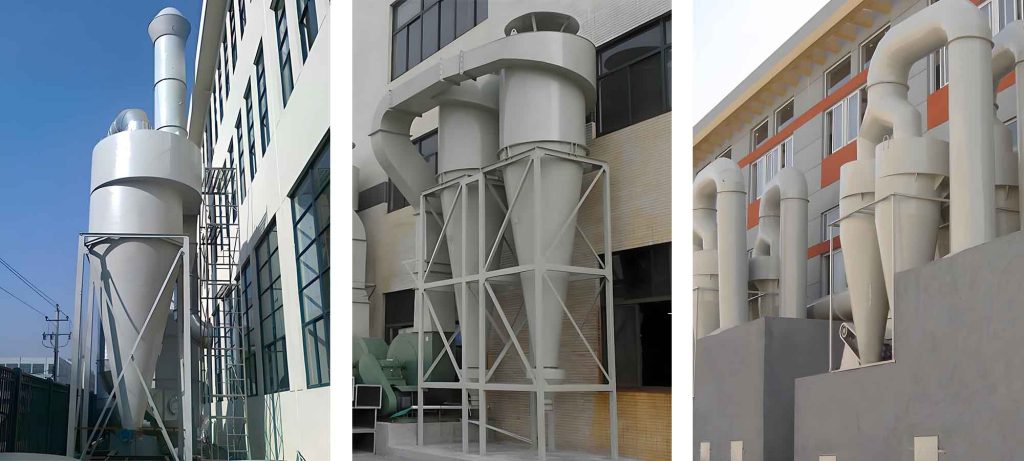
ما هو الفاصل الحلزوني؟
الفاصل الحلزوني هو جهاز فصل صناعي يعمل على إزالة الجسيمات الصلبة والغبار والحطام وقطرات السوائل من تيارات الغاز باستخدام قوة الطرد المركزي والجاذبية. وهو يُعد أحد المكونات الأساسية في عمليات الفصل الصناعية بين الغاز والمواد الصلبة.
على عكس المرشحات الكيسية وأجهزة الترسيب الكهروستاتيكي (ESPs)، لا يحتوي مجمع الغبار الحلزوني على أي أجزاء متحركة أو مواد استهلاكية للمرشح، كما أنه غير عرضة للانسداد. ويمكنه العمل بثبات في ظروف تشغيل تتسم بارتفاع درجة الحرارة وكثرة الغبار وارتفاع معدل التآكل، مما يجعله مثاليًّا لتطبيقات المعالجة الأولية الصناعية والترشيح الأولي واستعادة المساحيق.
المكونات الأساسية والفيزياء الهندسية
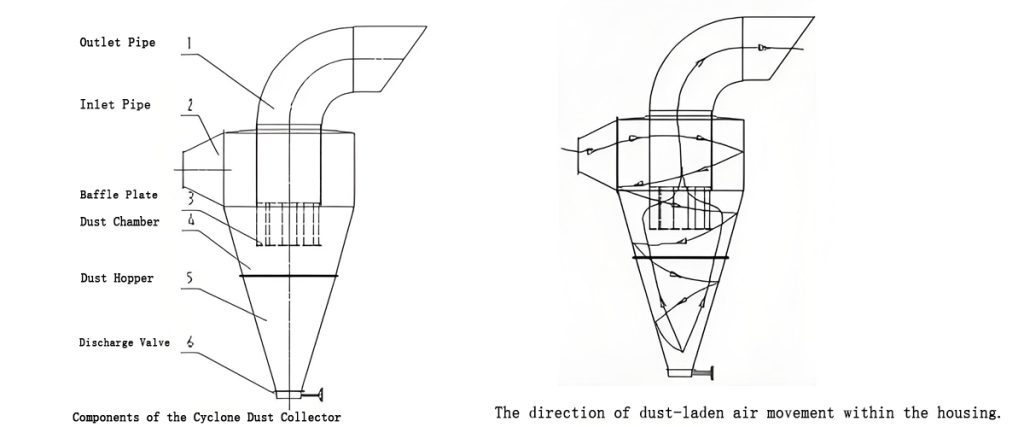
يعتمد أداء المروحة الحلزونية بشكل كبير على الشكل الهندسي لمكوناتها الأساسية. ويساعد فهم هذه الأجزاء المهندسين على تشخيص حالات انخفاض الكفاءة، وتآكل النظام، ومشاكل فقدان الضغط:
- مدخل عرضي: يحول التدفق الخطي للغاز إلى تيار هوائي دوامي عالي السرعة، مما يشكل مجال الطرد المركزي المستقر اللازم لفصل الجسيمات بدقة.
- جسم أسطواني: يعمل على تثبيت الدوامة الخارجية ويكمل عملية الفصل الأولي للجسيمات الخشنة والثقيلة عن تيار الغاز.
- المقطع المخروطي: يقلل تدريجيًا من نصف قطر دوران تدفق الهواء، مما يدفع الغبار إلى الأسفل مع تسريع سرعة الدوامة لالتقاط الجسيمات الأكثر دقة.
- مكتشف الدوامات (مخرج الغاز المركزي): يمتد إلى أسفل داخل الأسطوانة لمنع حدوث قصر في مسار الغاز الملوث، مما يضمن خروج الهواء الداخلي المنقى من الدوامة فقط من النظام.
- قادوس الغبار: يجمع الغبار المستقر في القاعدة من أجل التخلص منه بشكل مركزي أو استعادة المواد القيمة. ويُعد الإغلاق المحكم تمامًا أمرًا بالغ الأهمية لتجنب فقدان الكفاءة.
مبدأ العمل: آليات الفصل بالطرد المركزي
يعتمد مبدأ عمل الفاصل الدوامي كليًّا على الفصل بالطرد المركزي الدوامي. ولا تتطلب العملية بأكملها أي أجزاء متحركة تعمل بالطاقة الكهربائية، بل تعمل فقط بفضل الطاقة الحركية لتدفق الهواء:
- مدخل هواء عرضي عالي السرعة: يدخل الغاز المحمل بالغبار إلى غرفة الفصل الحلزوني بسرعة محددة تتراوح بين 18 و25 م/ث، مكونًا دوامة خارجية عالية السرعة تتجه نحو الأسفل على طول الجدار الداخلي.
- فصل الجسيمات بالطرد المركزي: تتعرض جزيئات الغبار الموجودة داخل تيار الهواء لقوة طرد مركزي تزيد عن قوة الجاذبية بمقدار 500 إلى 2000 مرة، مما يدفع الجزيئات إلى الخارج باتجاه جدار الفاصل الحلزوني.
- الترسيب بالجاذبية وجمع الغبار: عندما تصطدم الجسيمات بالجدار الداخلي، تفقد طاقتها الحركية، وتنزلق على طول الجزء المخروطي، وتستقر في قادوس الغبار السفلي.
- تفريغ الغاز النظيف: عندما يصل عمود الهواء الدوار إلى القاع، يعكس اتجاهه، مكونًا دوامة داخلية صافية تصعد إلى الأعلى وتخرج عبر فتحة الدوامة المركزية.
مؤشر الأداء الرئيسي: فهم قطر القطع D50
- السيكلونات القياسية: الأفضل للغبار المتوسط والخشن الذي يزيد حجمه عن 10 ميكرومتر، ومثالي لإزالة الغبار الأولية العامة، مع قطر قطع D50 نموذجي يتراوح بين 10 و20 ميكرومتر.
- السيكلونات عالية الكفاءة: يلتقط بشكل ثابت الجسيمات الدقيقة التي يتراوح حجمها بين 4 و7 ميكرومتر، وهو مناسب لمعايير الانبعاثات الصناعية الصارمة، حيث يصل قطر القطع D50 إلى 4 ميكرومتر.
قاعدة المرشح الأولي لتحقيق أقصى عائد على الاستثمار: إذا كانت معايير الانبعاثات المحلية تتطلب التحكم في الغبار فائق الدقة (حدود جسيمات PM2.5 والجسيمات الأصغر من 10 ميكرومتر)، فاعتبر الفاصل الحلزوني بمثابة فاصل أولي عالي السعة. إن إزالة ما يصل إلى 90% من الغبار الثقيل والجسيمات الخشنة الكاشطة قبل وصولها إلى غرف الترشيح الكيسية في المراحل اللاحقة يمكن أن يطيل عمر خدمة أكياس الترشيح بمقدار 300%–400%، مما يقلل بشكل كبير من تكاليف الاستبدال وفترات توقف الإنتاج غير المخطط لها.
التغلب على تحديات التآكل في صناعات الأسمنت والتعدين
في الصناعات الثقيلة مثل إنتاج الأسمنت والتعدين ومعالجة الركام، تتعامل أجهزة الفصل الحلزونية مع مواد شديدة الكشط، بما في ذلك كلنكر السيليكا والكوارتز والحجر الجيري وخامات المعادن. وعند سرعات دخول عالية، تعمل هذه الجسيمات كورق الصنفرة، مما يؤدي إلى تآكل الأغلفة القياسية المصنوعة من الفولاذ الكربوني في أقل من ستة أشهر.
يؤثر اختيار مادة البطانة المناسبة بشكل مباشر على العمر التشغيلي، وتواتر الصيانة، والتكلفة الإجمالية للملكية (TCO).
مقارنة أداء مواد البطانة المقاومة للتآكل
مادة البطانة | الصلابة (موس / HRC) | مؤشر العمر التشغيلي | سيناريوهات الاستخدام المثالية |
|---|---|---|---|
الفولاذ الكربوني القياسي | ~150 HB | 1x (القيمة المرجعية) | جمع الغبار غير الكاشط، للأعمال الخفيفة |
فولاذ هاردوكس / AR400 | 40–50 HRC | 3x – 4x | المعادن متوسطة الكشط، معالجة الركام |
الحديد الزهر عالي الكروم | 55–62 HRC | 6x – 8x | المناطق ذات التأثير الكبير: مدخل المجرى والجزء المخروطي العلوي |
92%/95% سيراميك الألومينا | 9 على مقياس موهس | 15x – 20x | كلنكر الأسمنت، الكوارتز، الغبار الناعم شديد الكشط |
لماذا تُعد البطانة الخزفية المصنوعة من الألومينا المعيار الذهبي في هذا المجال
- صلابة قصوى: توفر صلابة 9 على مقياس موهس مقاومة فائقة للتآكل الناتج عن المواد المعدنية والغبار الكاشط.
- لا تحتاج إلى صيانة متكررة: تعمل الوحدات المبطنة بالسيراميك لمدة تتراوح بين 3 و5 سنوات دون الحاجة إلى إصلاحات أو استبدال الغلاف الخارجي، مما يلغي تكاليف العمالة المرتبطة بالإصلاحات المستمرة.
- استقرار حراري عالٍ: على عكس البطانات المطاطية التي تتحلل أو تذوب عند درجات حرارة تزيد عن 200 درجة مئوية، تظل البلاطات الخزفية الملصقة بمواد لاصقة غير عضوية مقاومة للحرارة عالية مستقرة هيكليًّا حتى 500 درجة مئوية، مما يجعلها مناسبة لمعظم البيئات الصناعية التي تتسم بارتفاع درجات حرارة غازات المداخن.
حالة عملية حقيقية لعائد الاستثمار في القطاع الصناعي: الفشل بعد 6 أشهر مقابل عمر خدمة يبلغ 5 سنوات
الأنواع الشائعة لفواصل الإعصار
1. فاصل حلزوني فردي
2. فاصل متعدد الأعاصير (Multiclone)
3. فاصل حلزوني عالي الكفاءة
4. فاصل دوامي ذو انخفاض ضغط منخفض
3 أسباب خفية وراء انخفاض كفاءة جهاز «سيكلون» الخاص بك (دليل المهندس لحل المشكلات)
- تسرب الهواء (القاتل الصامت): إن تسرب الهواء بمقدار 5% فقط من قادوس الغبار أو صمام التفريغ يؤدي إلى انخفاض الكفاءة بنسبة تتراوح بين 10% و20%. وتؤدي تيارات الهواء الصاعدة إلى إعادة جر الغبار المستقر إلى العادم النظيف. لذا، يجب دائمًا الحفاظ على إحكام إغلاق صمامات القفل الهوائي الدوارة.
- سرعة تدفق غير متوازنة عند المدخل: إن الحفاظ على سرعة أقل من 18 م/ث لا يولد قوة طرد مركزي كافية لفصل جزيئات الغبار الدقيقة؛ أما السرعة التي تزيد باستمرار عن 25 م/ث فتتسبب في اضطراب مفرط في تدفق الهواء، وإعادة انجراف الجزيئات، وإهدار غير ضروري لطاقة المروحة، وكلا الأمرين يؤديان إلى انخفاض كفاءة الفصل الإجمالية.
- الملء الزائد لخزان التغذية: تؤدي أكوام الغبار الزائدة إلى إعاقة انعكاس الدوامة السفلية، مما يتسبب في إعادة شفط الغبار المستقر إلى مدخنة العادم، ويؤدي إلى انخفاض حاد في كفاءة التنقية.
مقارنة تقنية: الفاصل الحلزوني مقابل مرشح الأكياس مقابل المرشح الكهروستاتيكي (ESP)
بند المقارنة | فاصل إعصاري | جهاز الترسيب الكهروستاتيكي (ESP) | |
|---|---|---|---|
حجم الجسيمات المطبق | 2.5–100 ميكرومتر | 0.1–100 ميكرومتر | 0.01–100 ميكرومتر |
كفاءة الإزالة | 50% – 99% | 95% – 99.9% | 90% – 99.9% |
متطلبات المواد الاستهلاكية | لا توجد مستهلكات | استبدال أكياس الترشيح بشكل دوري | صيانة الأقطاب الكهربائية النادرة |
تكاليف التشغيل والصيانة | منخفضة للغاية | مرتفعة (تكاليف العمالة + تكاليف المرشحات) | متوسط |
التكلفة الأولية للمعدات | منخفضة | متوسط | عالية |
المساحة الأرضية | صغيرة الحجم وموفرة للمساحة | مساحة كبيرة | مساحة كبيرة جدًا |
أفضل تطبيق | إزالة الغبار المسبق، الغبار الكاشط، استعادة المواد، غازات المداخن عالية الحرارة | الجسيمات الدقيقة، الالتزام الصارم بمعايير الانبعاثات | أنظمة محطات توليد الطاقة ذات التدفق الهوائي الضخم للغاية |
كيفية اختيار الفاصل الحلزوني المناسب (قائمة مراجعة هندسية تفصيلية)
- التحقق من خصائص الغبار: قم بتحليل توزيع حجم الجسيمات (PSD)، وتركيز الغبار، والرطوبة، ودرجة الكشط. اختر النماذج القياسية للغبار الخشن، والنماذج عالية الكفاءة للغبار الناعم، والنماذج المبطنة بالسيراميك للغبار المعدني الكاشط.
- التحقق من تدفق الهواء الفعلي أثناء التشغيل: حساب حجم الغاز الحقيقي في ظل درجة الحرارة والضغط السائدين في الموقع، من أجل التوافق بدقة مع تكوينات الفصل أحادية أو متعددة الدوامات.
- توضيح أهداف خفض الانبعاثات: استخدم الفصل الدوامي كوسيلة فعالة من حيث التكلفة للفصل المسبق؛ وقم بدمجه مع مرشحات أكياس في المراحل اللاحقة في حالة تطبيق معايير صارمة للانبعاثات فائقة الدقة.
- التكيف مع بيئة التشغيل: اختر هياكل مقاومة للحرارة العالية لمواجهة غازات المداخن الساخنة، وتصميمات من الفولاذ المقاوم للصدأ لمقاومة التآكل في حالة الغازات الصناعية المسببة للتآكل.
 English
  Russian
  French
  Portuguese
  Arabic
  Spanish
  Japanese