What is Cement? & Cement Plant Equipment

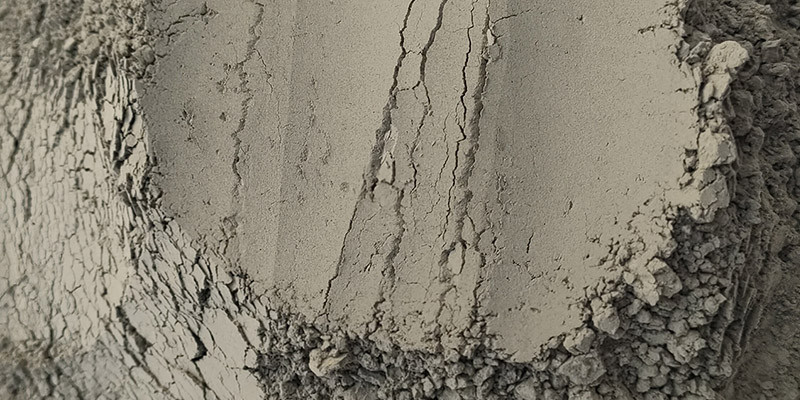
Cement is an essential material in modern construction, used in foundations, roads, bridges, water conservancy and nuclear power projects. This fine gray powder binds sand and stone into solid structures, and its efficient production relies on professional cement plant equipment. This article explains key topics about cement—what it is, how it’s made, its types, and how it differs from concrete—while introducing the core cement equipment that ensures stable and eco-friendly production, such as cement plant dust collectors, conveyors and valves.

1. What is Cement?

Scientifically, cement is a hydraulic inorganic cementitious material. When mixed with water, it forms a plastic paste that hardens in air and water, binding aggregates like sand and stone firmly to form solid building components. Simply put, cement acts as an adhesive in construction, holding loose aggregates together to form strong structures. It is one of the most widely used building materials globally, with stable performance and strong adaptability.
The first Portland cement patent was granted to Joseph Aspdin in 1824. Since then, cement has been used in construction for nearly 200 years. Today, China is the world’s largest cement producer, accounting for about 57% of global output. This achievement is supported by high-efficiency, stable cement production equipment—reliable equipment ensures consistent cement quality and production efficiency.
cemento

2. How is Cement Made?

Cement production is a systematic process, often summarized as “two grinding and one burning”—raw material grinding, clinker calcination, and cement grinding. Each step requires precise coordination of professional cement plant equipment. Dust collectors, conveyors, and valves are key equipment throughout the process, ensuring efficient, eco-friendly and orderly production.
Step 1: Raw Material Pretreatment and Conveying. The main raw materials for cement production include calcareous materials (limestone, chalk, etc.), siliceous correction materials, aluminous correction materials and ferrous correction materials.These raw materials are first crushed by crushers. The crushed materials are transported to the pre-homogenization yard by belt conveyors and bucket elevators to achieve uniform mixing, laying the foundation for subsequent production. Dust is generated during crushing and conveying—our pulse baghouse dust collectors and electric-bag composite dust collectors effectively collect and purify dust, ensuring emissions meet international environmental standards. Our dust collectors feature high dust removal efficiency, stable operation and low maintenance costs, making them ideal for cement plant raw material processing lines.
Step 2: Raw Meal Preparation and Homogenization. Pretreated raw materials are mixed in proportion by the batching system and sent to raw meal mills (vertical mills or ball mills) for grinding. The ground raw meal is transported to separators by air slide conveyors and screw conveyors to screen out qualified fineness; coarse particles are returned to the mill for re-grinding. After homogenization in the raw meal homogenization silo, the feeding amount is precisely controlled by our electric flow valves and belt scales before being sent to the preheater. Our electric flow valves adopt wear-resistant and corrosion-resistant materials, with high adjustment accuracy (error ≤ ±1%) and good sealing performance, ensuring stable raw meal flow. Screw conveyors and air slide conveyors are designed for closed transportation, avoiding material leakage and dust pollution.
Step 3: Clinker Calcination. Homogenized raw meal enters the rotary kiln and is calcined into clinker at about 1450℃. Flue gas generated during calcination recovers heat through the preheater and precalciner, then is purified by kiln tail dust collectors (baghouse or electrostatic precipitators) before emission. The calcined clinker is cooled by a grate cooler and transported to the clinker silo by clinker bucket chain conveyors. Waste heat from cooling is recycled for energy conservation. Our kiln tail dust collectors are specially designed for high-temperature flue gas, with heat resistance up to 200℃, ensuring long-term stable operation in harsh working conditions.
Step 4: Cement Grinding and Finished Product Conveying. Clinker is mixed with an appropriate amount of gypsum and admixtures (fly ash, slag, etc.) in proportion and sent to cement mills (vertical mills or ball mills) for final grinding. Qualified cement after screening by separators is transported to cement silos by air slides and bucket elevators, then packaged in bulk or bags by cement bulkers and packaging machines, and finally transported out by closed tank trucks. Our pulse baghouse dust collectors are used in the grinding process to collect dust, with a dust removal efficiency of over 99.99%, meeting global environmental requirements. Gate valves and butterfly valves are used to control cement conveying flow—our valves have a service life of more than 50,000 hours, reducing maintenance frequency and production downtime for cement plants.

3. Types of Cement | Best Cement for Different Construction Projects

Different construction projects have different requirements for cement performance, so cement is divided into various types. The production process of each type requires adjusting equipment parameters to ensure qualified product quality. Choosing the right type of cement is crucial for construction quality, which is a common concern for construction companies and engineers.
Cement is mainly classified into three categories according to its use and performance:
1. General Purpose Cement: Suitable for general civil engineering, including Portland cement, ordinary Portland cement, slag Portland cement, etc.. It is the most widely used type in the construction industry. The production process is standardized, requiring cement plant equipment with strong versatility. Our belt conveyors, dust collectors and valves are designed to adapt to different raw materials and production links, ensuring stable operation in large-scale general cement production lines. They are easy to install and maintain, reducing overall operating costs for cement plants.
2. Special Purpose Cement: Designed for specific engineering scenarios, such as oil well cement, road cement, masonry cement, etc.. For example, oil well cement requires high strength and corrosion resistance to meet the cementing needs of oil and gas wells. Our high-precision batching valves and efficient grinding equipment ensure accurate raw material ratios and qualified cement fineness, supporting energy exploration projects worldwide. Our equipment can be customized according to the production needs of special cement, ensuring product performance meets project requirements.

3. Special Performance Cement: With outstanding single performance, such as rapid hardening Portland cement, sulfate-resistant cement, nuclear power cement, etc.. Nuclear power cement is a special material for core parts of nuclear power plants (nuclear island, valve base), serving as the last line of defense for nuclear power safety. Its production requires equipment with high precision and stability. Our high-precision batching valves, efficient grinding equipment and strict dust removal systems ensure the cement is free of impurities and has stable performance, which has been applied in nuclear power projects around the world.

In addition, according to the main hydraulic minerals, cement can also be divided into Portland cement, aluminate cement, sulfoaluminate cement, etc.. The production of different types of cement requires matching crushing, grinding, conveying and dust collection equipment according to raw material characteristics and product requirements. We provide customized equipment solutions for different cement production needs, helping cement plants improve production efficiency and product quality.

4. Cement vs Concrete: What’s the Difference? | Construction Materials Guide

Many people confuse cement and concrete, but they are different—cement is a core raw material for making concrete, while concrete is a finished product made from cement. This is a common question for construction beginners and project managers, and understanding their differences is essential for material selection.
Composition: Cement is a single powdery cementitious material, mainly composed of calcined clinker and gypsum. It has low strength and is prone to cracking when used alone, so it cannot be directly used in building structures. Concrete is a composite material, composed of cement (10-15% as a cementitious material), coarse aggregates (gravel, 30-35%), fine aggregates (sand, 30-35%), water (15-20%) and admixtures. Concrete has higher strength and durability due to the addition of aggregates, making it suitable for structural construction.
Application: Cement must be mixed with sand, stone and water to play its role, while concrete can be directly used for pouring components, building walls and paving roads. Both cement production and concrete mixing rely on professional equipment. Cement production requires crushing, grinding, conveying and dust collection equipment; concrete mixing requires concrete mixing plants, where raw materials (cement, sand, stone) are transported by our belt conveyors and screw conveyors. Our valves control the feeding ratio of various raw materials, ensuring accurate concrete proportioning and stable quality.

5. High-Efficiency Cement Production Relies on High-Quality Cement Plant Equipment

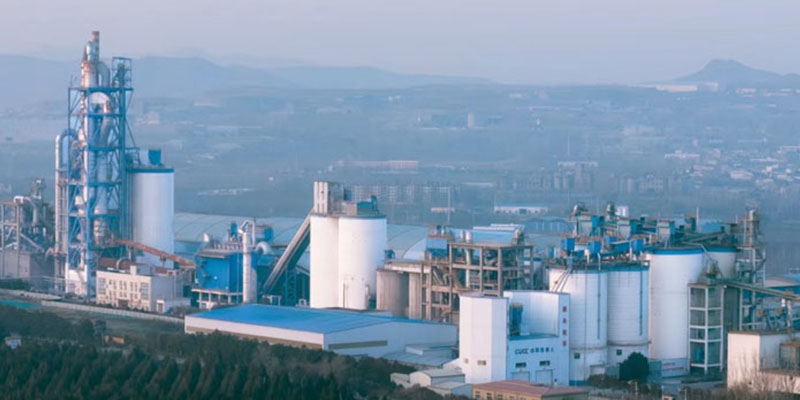
The high-quality development of the cement industry requires advanced production processes and reliable equipment. As a professional cement plant equipment manufacturer, we focus on the entire cement production process, providing complete equipment solutions for different production capacities (1000t/d to 10000t/d) and processes. Our products include various cement dust collectors, conveyors, valves and core host equipment, helping cement plants achieve efficient, eco-friendly and energy-saving production. We have rich experience in serving global cement plants, with products exported to more than 50 countries and regions.
Dust Collectors: We provide pulse baghouse dust collectors,  and special dust collectors for kiln head and kiln tail—all suitable for dust-generating links such as raw material crushing, raw meal grinding, cement grinding and clinker calcination. Key advantages: ① High dust removal efficiency (over 99.99%), meeting EU and US environmental standards; ② Wear-resistant and high-temperature resistant filter bags, service life up to 3 years; ③ Intelligent control system, automatic ash cleaning, reducing manual maintenance; ④ Energy-saving design, 15% lower power consumption than ordinary dust collectors. Our dust collectors help cement plants achieve green production and avoid environmental penalties.
Conveyors: Our product range includes cintas transportadoras, elevadores de cangilones, transportadores de tornillo y transportadores de deslizamiento neumático, suitable for transporting different materials (raw materials, raw meal, clinker, finished cement) in various scenarios. Key advantages: ① Belt conveyors: long-distance (up to 100m) and large-capacity (up to 1000t/h) transportation, with anti-deviation and anti-wear design; ② Bucket elevators: stable vertical transportation, low material loss (≤0.5%); ③ Screw conveyors: closed transportation, no dust leakage, suitable for small-space installation; ④ Air slide conveyors: energy-saving and low noise, suitable for fine powder transportation. All conveyors adopt high-quality steel, with a service life of more than 10 years, reducing equipment replacement costs.
Valves: We provide electric flow valves, gate valves, butterfly valves and ball valves in various specifications, accurately adapting to flow control needs in batching, feeding and discharging links of cement production. Key advantages: ① High adjustment accuracy (error ≤ ±1%), ensuring precise material proportioning; ② Wear-resistant and corrosion-resistant valve core (adopting high-chromium alloy), suitable for abrasive cement materials; ③ Good sealing performance, no material leakage; ④ Easy installation and maintenance, supporting on-site debugging. Our valves effectively ensure stable raw meal proportioning, clinker transportation and accurate finished cement metering, avoiding quality problems caused by flow control errors.
In addition, we provide supporting services for core host equipment such as vertical mills, ball mills and rotary kilns. We customize exclusive equipment solutions according to the production needs of cement plants, whether it is a new dry-process cement production line or a special cement production project. Our equipment can reduce energy consumption by 10-20% and increase production capacity by 8-15% compared with ordinary equipment, helping cement plants improve profitability. We also provide 24/7 after-sales service, including on-site installation, debugging and maintenance, ensuring continuous operation of production lines.
cement plant1.png

Conclusión

Cement is the foundation of modern construction, and high-quality cement plant equipment is the key to efficient and stable cement production. From raw material crushing to finished product delivery, every link relies on dust collectors, conveyors, valves and other equipment. Choosing the right cement equipment can significantly improve production efficiency, reduce operating costs and ensure product quality.
As a professional cement plant equipment manufacturer, we adhere to the principle of “quality first, customer-oriented”, focusing on the core needs of cement production. We are committed to providing high-reliability, cost-effective equipment and customized solutions for global cement plants. Whether you need dust collectors, conveyors, valves or complete production line equipment, we can meet your needs. We look forward to cooperating with you to promote the sustainable development of the global cement industry.

No dude en enviarnos su consulta a través del siguiente formulario. Le responderemos en 24 horas.

* Nombre :
País :
* Email :
Tel :
Mensaje :