En la industria de la construcción, el debate entre el Cemento Portland Ordinario (OPC) y el Cemento Portland Puzolana (PPC) es permanente. Elegir el más adecuado no sólo tiene que ver con el coste, sino también con la integridad estructural, la durabilidad y los plazos del proyecto.
¿Qué es el cemento OPC?
El OPC (Cemento Portland Ordinario) es el cemento más tradicional y utilizado en todo el mundo. Se compone principalmente de piedra caliza, arcilla y otros minerales calcinados a altas temperaturas para formar clínker, que luego se muele con una pequeña cantidad de yeso.
Comprender los grados OPC
El OPC se suele clasificar por su resistencia a la compresión:
- Cemento de grado Opc 33: Utilizado para albañilería general y enlucido.
- Cemento de grado Opc 43: El grado más común para trabajos residenciales de RCC.
- Cemento de grado Opc 53: Cemento de alta resistencia para edificios altos e infraestructuras pesadas.
Ventajas del cemento OPC
- Alta resistencia temprana: El OPC alcanza su resistencia requerida mucho más rápido que el PPC, lo que lo hace ideal para elementos estructurales.
- Construcción más rápida: Debido a su rápido tiempo de fraguado, el encofrado puede retirarse antes (a menudo en 7 días). Esto acelera significativamente el ciclo de construcción.
- Rendimiento en climas fríos: Su elevado calor de hidratación lo hace más eficaz para la construcción en entornos de bajas temperaturas.
Desventajas del cemento OPC
- Mayor riesgo de agrietamiento: El intenso calor generado durante el fraguado puede provocar grietas térmicas en grandes masas de hormigón.
- Menor resistencia química: Es más susceptible a los ataques de sulfatos y cloruros.
Usos comunes del cemento OPC
- Edificios de gran altura y estructuras portantes (pilares y vigas).
- Infraestructuras pesadas como puentes y pasos elevados.
- Elementos prefabricados de hormigón como traviesas de ferrocarril.
¿Qué es el cemento PPC?
El PPC (cemento puzolánico Portland) es un tipo de cemento mezclado. Se fabrica moliendo clinker OPC con materiales puzolánicos 20% a 30% (como cenizas volantes).
Ventajas del PPC
- Durabilidad superior: La inclusión de cenizas volantes hace que el hormigón sea más denso, ofreciendo una excelente resistencia a la humedad y a los productos químicos.
- Mejor trabajabilidad: El PPC tiene partículas más finas, lo que hace que la mezcla de hormigón sea más suave y fácil de aplicar para el enlucido y el acabado.
- Ecológico: La utilización de residuos industriales (cenizas volantes) reduce la huella de carbono, lo que lo convierte en un material de construcción “verde”.
- Reducción de grietas: Produce menos calor durante el fraguado, lo que evita grietas en grandes estructuras como los cimientos.
Usos comunes del PPC
- Albañilería residencial, enlucido y alicatado.
- Construcción costera y estructuras marinas (por su resistencia a la corrosión).
- Obras de hormigón en masa como cimientos y depósitos de agua.
Desventajas del cemento PPC
- Tiempo de fraguado lento: El PPC se endurece más lentamente, lo que significa que el encofrado debe permanecer en su lugar durante más tiempo (a menudo entre 10 y 14 días).
- Menor resistencia inicial: Su resistencia a los 3 y 7 días es inferior a la del OPC, aunque su resistencia final es comparable.
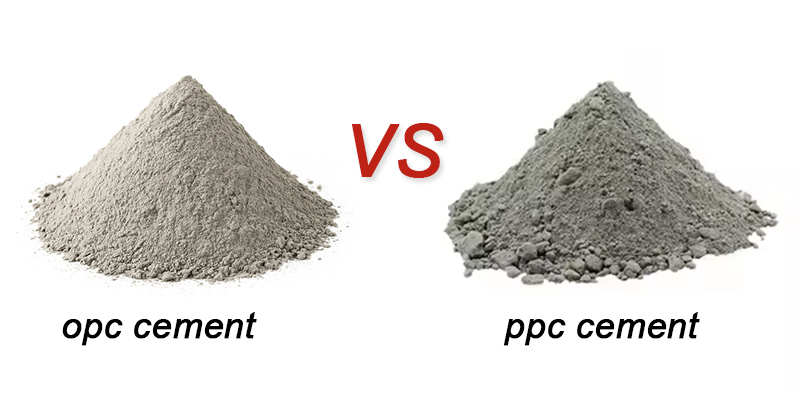
Comparación: OPC frente a PPC de un vistazo
La siguiente tabla resume las diferencias clave entre OPC y PPC, ayudándole a tomar una decisión rápida e informada para su proyecto.
Característica | Cemento OPC | Cemento PPC |
|---|---|---|
Composición | Clinker + Yeso | Clinker + Yeso + Cenizas volantes |
Fuerza inicial | Muy alto (grado 53/43) | Moderado |
Tiempo de ajuste | Rápido | Más lento |
Calor de hidratación | Alta (Riesgo de grietas térmicas) | Bajo (Menos riesgo de grietas) |
Periodo de curación | 7 - 10 días | 10 - 14 días |
Durabilidad | Estándar | Alta (resistente a los sulfatos) |
Precio de mercado | Más alto (10%-20% más) | Más rentable |
Cómo elegir: ¿OPC frente a PPC?
El veredicto depende de los requisitos específicos de su proyecto:
- Elija OPC si: Trabaja en estructuras de gran altura o tiene un plazo de entrega ajustado. Es el mejor para elementos portantes en los que se requiere una resistencia temprana y un desencofrado rápido.
- Elija PPC si: Está centrado en trabajos de acabado (enlucido), o construye en zonas costeras/húmedas. Es la elección ideal para cimentaciones masivas en las que se prioriza la durabilidad a largo plazo y la rentabilidad.
PREGUNTAS FRECUENTES: Preguntas comunes sobre OPC y PPC
¿Puedo utilizar OPC para el enlucido?
Sí, pero generalmente se prefiere el PPC para el enlucido porque ofrece un acabado más liso y es menos propenso a las grietas por contracción.
¿Qué cemento es mejor para las losas?
Para la mayoría de las losas residenciales, el OPC de grado 43 o 53 es el estándar para la resistencia. Sin embargo, si la losa es muy grande, puede utilizarse PPC para controlar el calor y el agrietamiento.
¿Tiene el PPC una vida útil menor que el OPC?
No. De hecho, el PPC suele tener una vida útil más larga en entornos difíciles debido a su mayor resistencia química.
¿Qué es más barato, OPC o PPC?
El PPC es más rentable que el OPC, ya que suele costar 10%-20% menos. Esto lo convierte en la mejor opción para proyectos en los que el presupuesto es una consideración clave.
¿Es bueno el PPC para las losas del tejado?
Sí, el PPC es adecuado para losas de tejado, especialmente las de gran tamaño. Su bajo calor de hidratación reduce el riesgo de agrietamiento térmico, y su durabilidad a largo plazo ayuda a proteger el tejado de la humedad y la intemperie.
 English
  Russian
  French
  Portuguese
  Arabic
  Spanish
  Japanese