
En tant que leader du secteur industriel transporteur à vis En tant que fabricant, nous savons que la lame hélicoïdale (également appelée « spire de vis sans fin ») est le cœur de votre système de manutention de matériaux en vrac. Lorsque les lames tombent en panne, c'est toute votre chaîne de production qui s'arrête.
Dans ce guide complet, nous allons vous expliquer en détail le fonctionnement d'un convoyeur à vis et, surtout, comment identifier et résoudre les 8 défaillances les plus courantes des pales afin d'assurer le bon déroulement de vos opérations.
1. Qu'est-ce qu'un convoyeur à vis ?
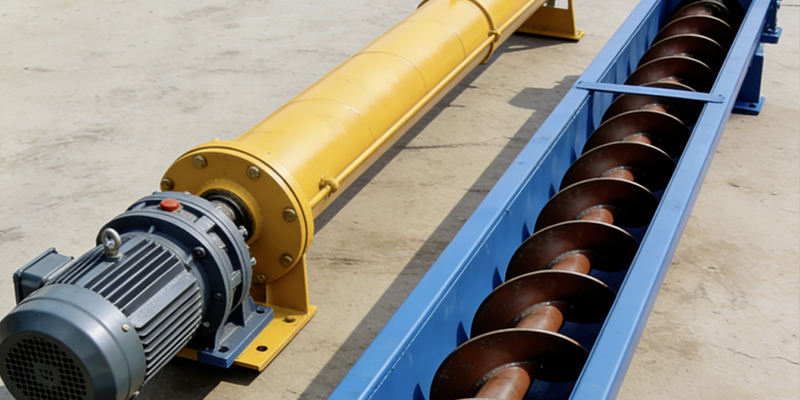
Un convoyeur à vis est un équipement de transport en continu très polyvalent, utilisé dans divers secteurs tels que l'exploitation minière, l'industrie chimique et l'industrie agroalimentaire. Il utilise une vis hélicoïdale en rotation pour acheminer des poudres, des granulés et des matériaux en vrac à travers une auge ou un tuyau.
Sa structure simple et son faible encombrement en font la solution idéale pour le transport horizontal, incliné ou vertical. Chez Darko, nous concevons ces systèmes pour traiter toutes sortes de matériaux, du ciment fin aux minerais abrasifs.
2. Comment fonctionne un convoyeur à vis ?
Le principe est à la fois efficace et simple : un arbre entraîné par un moteur fait tourner les pales hélicoïdales soudées. En tournant, celles-ci génèrent poussée axiale sur le sujet.
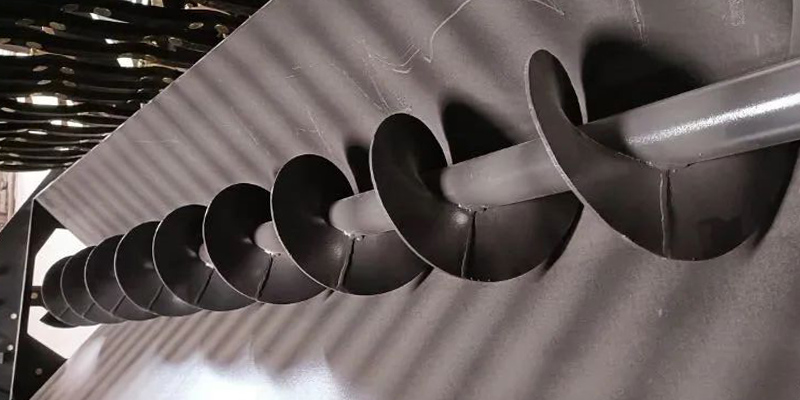
Sous l'effet combiné du frottement entre le matériau et les pales, et du frottement contre la paroi du cylindre, le matériau avance de manière linéaire. La qualité et la précision du pas de la vis et de l'épaisseur des pales déterminent directement l'efficacité et la stabilité du transport de votre système.
3. 8 défaillances courantes des pales de convoyeurs à vis : causes et solutions
① Usure des lames (usure par abrasion)
Symptômes : Des bords de pales amincis, un diamètre extérieur réduit et une baisse sensible de la capacité de transport.
Les causes : Manipulation de matériaux à haute dureté (tels que le sable ou les minéraux) ou rotation à grande vitesse sans revêtements résistants à l'usure.
Solution proposée par le fabricant : Nous vous recommandons soudage par superposition avec des électrodes résistantes à l'usure. Dans les environnements soumis à une forte usure, envisagez de passer à Acier AR (résistant à l'abrasion) ou en épaississant les bords des lames lors de la phase de fabrication.
② Déformation et torsion des pales
Symptômes : vibrations de l'équipement, bruits anormaux et bourrages de papier.
• Causes : surchargement ou “ démarrages forcés ” en cas d'obstruction due à des résidus de matière.
• Solution proposée par le fabricant : un léger gauchissement peut être corrigé. Toutefois, si l'arbre de la vis est tordu, il doit être redressé ou remplacé afin d'éviter d'endommager le moteur et les roulements.
③ Fissures et ruptures
Symptômes : Des vibrations importantes ou une incapacité soudaine à déplacer les matériaux.
Les causes : Une mauvaise qualité de soudure au niveau de la racine, ou une fatigue due à des cycles fréquents d'avancement et de recul.
Solution proposée par le fabricant : Utiliser soudage en rainure en cas de fissures mineures. Chez Darko, nous garantissons des soudures de haute qualité et renforçons les empoises des pales destinées à des applications à forte sollicitation afin de prévenir ces fractures.
④ Corrosion, rouille et perforation
Symptômes : Piqûres ou trous à la surface de la lame.
Les causes : Transport de matières acides, alcalines ou à forte teneur en humidité à l'aide d'acier au carbone ordinaire.
Solution proposée par le fabricant : Passez à Acier inoxydable 304 ou 316L lames hélicoïdales. Pour les applications chimiques spécifiques, nous proposons également des revêtements anticorrosion et des revêtements en caoutchouc.
⑤ Frottement contre la paroi du cylindre
Symptômes : Un grincement « métal contre métal » et un courant de fonctionnement élevé (ampères).
Les causes : Arbre principal tordu ou affaissé roulements suspendus.
Solution proposée par le fabricant : Réajustez l'installation et remplacez les dalles suspendues usées. Vérifiez régulièrement la concentricité de l'arbre afin d'éviter tout frottement contre la paroi.
⑥ Accumulation de matières et obstruction
Symptômes : Des résidus qui adhèrent à la surface de la pale, entraînant un décrochage.
Les causes : Une viscosité élevée du matériau (caractère collant) ou des surfaces de lame rugueuses.
Solution proposée par le fabricant : Poncez la surface de la lame ou installez-la lames de nettoyage (grattoirs) pour éviter les dépôts.
⑦ Détachement de soudage
Symptômes : La lame se détache de l'arbre du tuyau ; l'arbre tourne, mais la matière reste immobile.
Les causes : Une force excessive en cas de blocages ou une pénétration insuffisante de la soudure.
Solution proposée par le fabricant : Re-soudez et renforcez entièrement. Nous vous suggérons d'ajouter nervures de renfort segmentées pour les systèmes à couple élevé.
⑧ Déformation du pas (alimentation irrégulière)
Symptômes : Un débit variable et une vitesse de transport irrégulière.
Les causes : Des contraintes à long terme ou des méthodes de fabrication non conformes aux normes.
Solution proposée par le fabricant : Réajustez le pas. Des pales à vis standard fabriquées sur mesure constituent le meilleur moyen de garantir un débit constant.
4. Foire aux questions (FAQ)
À quelle fréquence dois-je vérifier l'usure des pales de mon convoyeur à vis ?
Pour les matériaux standard, une inspection trimestrielle est recommandée. Pour les matériaux abrasifs tels que le ciment ou les minéraux, des contrôles mensuels sont indispensables afin d'éviter toute défaillance soudaine.
Puis-je remplacer uniquement une partie de la lame hélicoïdale ?
Oui. Les pales à vis modulaires permettent de remplacer uniquement les parties endommagées sans avoir à changer l'arbre dans son intégralité, ce qui permet de réduire les coûts d'entretien.
Quel est l'avantage des lames en acier inoxydable par rapport à celles en acier au carbone ?
L'acier inoxydable (304/316) offre une résistance supérieure à la corrosion et est indispensable pour les applications alimentaires ou chimiques, tandis que l'acier au carbone est plus économique pour les solides en vrac secs et non corrosifs.
Pourquoi choisir Darko pour vos besoins en matière de convoyeurs à vis ?
En tant que fabricant professionnel d'équipements de manutention, Darko ne se contente pas de fournir des machines : nous proposons des solutions. Nos convoyeurs à vis sont conçus pour durer, avec des pales soudées avec précision et des systèmes d'entraînement très résistants. Contactez nous Il est désormais temps d'optimiser l'efficacité de votre manutention de matériaux en vrac.
 English
  Russian
  French
  Portuguese
  Arabic
  Spanish
  Japanese