Na conceção de sistemas de transporte de materiais a granel para indústrias como a do cimento, fabrico, exploração mineira, materiais de construção, cereais e petróleo, e produtos químicos, os transportadores pneumáticos e
elevadores de baldes destacam-se como os dois dispositivos de transporte mais comuns. Como fabricante profissional de elevadores de baldes, tratámos de inúmeros casos de seleção de equipamento para utilizadores industriais. Embora ambos os tipos de equipamento tenham os seus cenários de aplicação únicos, os elevadores de baldes tornaram-se o equipamento de transporte preferido pela maioria das fábricas em operações industriais de elevação vertical contínua de materiais a granel e de cargas pesadas. Eles oferecem rendimento estável, consumo de energia ultrabaixo e custos operacionais gerais muito mais baixos em comparação com soluções alternativas. Estes dois sistemas de transporte diferem muito em termos de princípios de funcionamento, desempenho de trabalho, estrutura de custos e cenários aplicáveis, pelo que é essencial fazer corresponder o equipamento correto a condições de trabalho específicas para uma conceção bem sucedida da linha de produção.
Fazer uma comparação racional entre transportadores pneumáticos e elevadores de baldes e selecionar o equipamento com base nas necessidades reais de produção ajuda as fábricas a aumentar eficazmente a eficiência da produção, a reduzir o desperdício de material e a reduzir os custos operacionais e de manutenção a longo prazo. Muitos gerentes de fábrica escolhem cegamente equipamentos de transporte flexíveis sem considerar a adaptabilidade das condições de trabalho, o que acaba levando a um rendimento insuficiente, consumo excessivo de energia e altas taxas de falha. Com base na nossa experiência em projectos e fabrico na linha da frente, comparamos objetivamente estes dois sistemas de transporte a granel para ajudar os utilizadores a encontrar a solução de transporte mais rentável e fiável.
Este artigo oferece uma comparação abrangente entre transportadores pneumáticos e elevadores de baldes, com uma análise aprofundada dos seus princípios de funcionamento, vantagens e desvantagens, compatibilidade de materiais, desempenho do consumo de energia, flexibilidade de instalação e aplicações típicas. Este guia detalhado permite que as empresas industriais tomem decisões bem informadas sobre a seleção de equipamento que corresponda perfeitamente aos seus requisitos de produção únicos.
1. Visão geral básica: O que são transportadores pneumáticos e elevadores de baldes?
Antes de iniciar uma comparação pormenorizada, é necessário clarificar as definições básicas e os princípios de funcionamento fundamentais dos sistemas de transporte pneumático e dos sistemas de transporte por elevador de alcatruzes. A conceção estrutural fundamental de cada equipamento determina diretamente o seu desempenho operacional e os cenários industriais aplicáveis.
1.1 O que é um transportador pneumático?
Como funciona um sistema pneumático? Um transportador pneumático é um sistema de manuseamento de materiais a granel de tubo fechado que transporta materiais secos a granel através de condutas seladas utilizando a pressão do ar, incluindo pressão positiva, pressão negativa de vácuo ou uma combinação de ambas. Um sistema completo de transporte pneumático é constituído por um ventilador, um filtro de ar, uma tubagem de transporte, uma entrada de material, uma saída de material e um separador de material.
Todo o sistema pneumático segue uma lógica operacional simples e estável. O ventilador gera um fluxo de ar estável e uma pressão de ar para suspender os materiais a granel no interior das condutas seladas e, em seguida, impulsiona continuamente os materiais para a frente, de modo a obter um transporte de ponto fixo e sem contacto, que depende inteiramente da força aerodinâmica. Sendo uma solução de manuseamento de materiais a granel altamente flexível, o transporte pneumático suporta o transporte multidirecional, incluindo percursos de transporte horizontais, verticais e curvos. É amplamente utilizado para o transporte de pós leves, partículas finas e materiais a granel de baixa densidade, e sua estrutura totalmente fechada elimina completamente os riscos de vazamento de poeira e contaminação do material.
1.2 O que é um elevador de alcatruzes?
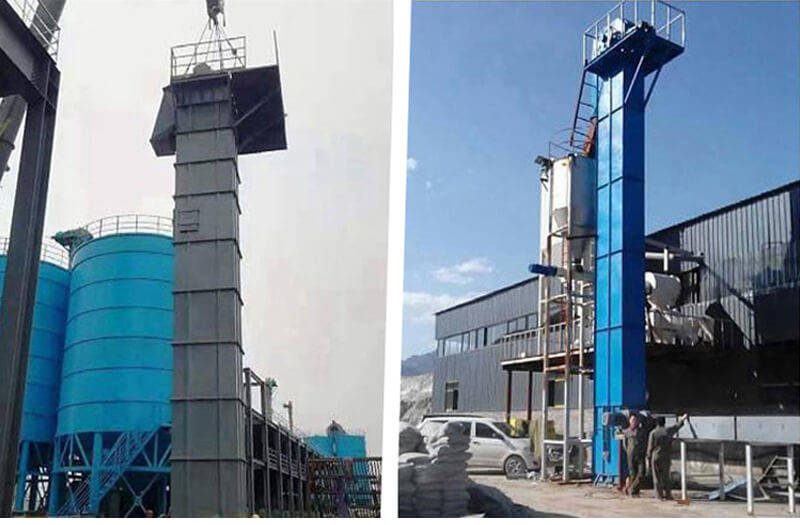
Como funciona um elevador de baldes? Um elevador de baldes é um dispositivo de transporte mecânico profissional especialmente concebido para o transporte vertical eficiente de materiais a granel. O seu princípio de funcionamento principal é simples, estável e fiável.
Todo o sistema de elevador de baldes funciona num ciclo de circulação contínuo. O motor elétrico acciona a correia ou corrente de circulação para funcionar de forma constante, e vários baldes de material fixados na estrutura de transmissão recolhem automaticamente os materiais a granel da entrada inferior. Os baldes carregados transportam os materiais verticalmente para cima ao longo do trilho, e ao atingir a altura superior predefinida, a gravidade e a força centrífuga trabalham em conjunto para descarregar os materiais completamente através da saída superior. Esta operação cíclica ininterrupta permite um transporte vertical estável e a longo prazo de materiais a granel. Como um dispositivo de transporte mecânico maduro, os elevadores de caçambas apresentam uma estrutura simples, grande capacidade de transporte de passagem única e operação estável, ideal para o transporte vertical de materiais a granel pesados e de granulometria grossa e materiais sólidos de alta densidade em linhas de produção industrial.
2. Principais comparações: Transportadores Pneumáticos vs. Elevadores de Baldes
Comparamos exaustivamente os transportadores pneumáticos e os elevadores de baldes com base em oito factores fundamentais que são mais importantes para os utilizadores industriais: flexibilidade de transporte, compatibilidade de materiais, consumo de energia e custos de funcionamento, desempenho do controlo de poeiras, complexidade de manutenção, requisitos de instalação, distância de transporte e capacidade de transporte.
2.1 Flexibilidade de transporte e conceção da tubagem
Os transportadores pneumáticos proporcionam uma excelente flexibilidade operacional. A disposição das condutas de um sistema de transporte pneumático é altamente adaptável, suportando curvatura multi-ângulo, transporte a longa distância e alimentação e descarga multi-ponto. As condutas podem contornar o equipamento de produção existente, as estruturas das oficinas e vários obstáculos, o que torna os transportadores pneumáticos adequados para layouts de fábrica complexos e projectos de renovação de linhas de produção antigas. Com quase nenhuma limitação de direção de transporte, podem completar o manuseamento horizontal e vertical integrado de materiais.
Os elevadores de baldes têm percursos de transporte fixos com flexibilidade limitada. Este equipamento apenas suporta a elevação vertical pura e não pode efetuar o transporte de material horizontal ou curvo. A posição de instalação é fixa e não pode ser ajustada após a instalação, e a rota de transporte não pode ser alterada arbitrariamente. Além disso, os elevadores de baldes não suportam alimentação e descarga multiponto, o que os torna incompatíveis com processos de produção flexíveis e diversificados, embora a sua estrutura fixa garanta uma maior estabilidade para cenários de elevação vertical padrão.
2.2 Adequação do material e desempenho do transporte
Os sistemas de transporte pneumático adaptam-se perfeitamente a materiais a granel leves e ultra-finos em pó, tais como farinha, pó de cimento, pó de talco, pellets de plástico, pó de alimentação e micro-pós químicos. A estrutura de tubagem totalmente selada evita eficazmente a fuga de material fino e a dispersão de poeiras. No entanto, os transportadores pneumáticos têm limitações óbvias na adaptabilidade do material. Não conseguem lidar com materiais húmidos, endurecidos, altamente viscosos ou partículas duras de grandes dimensões, uma vez que estes materiais causam facilmente bloqueios na tubagem e um desgaste grave do equipamento. Além disso, o fluxo de ar a alta velocidade no interior da tubagem pode provocar quebras e danos em materiais frágeis.
Os elevadores de baldes são concebidos para materiais a granel pesados e de grão grosso, incluindo minério, areia e gravilha, partículas de grãos, pedaços de carvão e agregados de construção. O método mecânico de elevação do balde proporciona um manuseamento suave do material com uma taxa de quebra de material extremamente baixa. Transporta de forma estável materiais de partículas grandes e de alta densidade e tolera materiais a granel moderadamente húmidos. Embora as estruturas padrão de balde aberto possam causar pequenas fugas de pó fino, os fabricantes profissionais podem resolver completamente este problema através da otimização personalizada, incluindo caixas seladas, portas de entrada e saída fechadas e acessórios à prova de pó.
2.3 Consumo de energia e custos de funcionamento
Os elevadores de baldes oferecem vantagens importantes em termos de poupança de energia. Como equipamento de transporte mecânico, baseiam-se na circulação de correntes e correias acionadas por motor em vez da compressão contínua de ar de alta potência. Dados industriais oficiais mostram que, para a mesma capacidade de transporte e altura de elevação vertical, os elevadores de baldes consomem menos 30% a 50% de energia do que os transportadores pneumáticos. Esta caraterística significativa de poupança de energia torna os elevadores de baldes altamente rentáveis para operações de transporte vertical contínuo a longo prazo.
Os transportadores pneumáticos consomem muito mais energia eléctrica durante o funcionamento. O ventilador tem de funcionar continuamente a alta potência para manter a pressão de ar estável para o transporte de material, o que resulta num consumo global de energia extremamente elevado. Em condições de produção contínua industrial de alta capacidade e de longas horas, os custos de funcionamento da eletricidade a longo prazo continuarão a aumentar de forma constante. Embora as disposições flexíveis das condutas poupem custos parciais de equipamento auxiliar, estes benefícios não podem compensar os enormes custos de consumo de energia em cenários de elevação de cargas pesadas na indústria convencional, razão pela qual cada vez mais grandes fábricas industriais substituem os transportadores pneumáticos por elevadores de baldes.
2.4 Controlo de poeiras e normas de higiene
Os transportadores pneumáticos cumprem normas de higiene e proteção ambiental ultraelevadas. A estrutura da tubagem, totalmente fechada, isola completamente os materiais do ambiente externo, permitindo zero fugas de pó e zero derrames de material. Evita eficazmente a poluição do ar na oficina e a contaminação cruzada de materiais, cumprindo totalmente os rigorosos requisitos de produção das indústrias alimentar, farmacêutica e de química fina.
O desempenho do controlo de poeiras dos elevadores de baldes pode ser totalmente optimizado para cumprir as normas ambientais industriais. Embora os elevadores de baldes tradicionais tenham pequenos problemas de dispersão de poeiras, nós eliminamos completamente a fuga de poeiras através de designs profissionais personalizados, incluindo caixas de equipamento seladas, portas de entrada e saída totalmente fechadas e interfaces de recolha de poeiras reservadas. Os elevadores de baldes optimizados e actualizados cumprem totalmente os requisitos de proteção ambiental e de produção limpa das modernas oficinas ecológicas, das fábricas de processamento de cereais e óleo e das linhas de produção de materiais de construção. Pequenos problemas de poeiras em condições de trabalho normais são completamente resolvidos através da otimização do fabricante e não afectam a produção normal. Além disso, os elevadores de baldes deixam um mínimo de resíduos de material e a limpeza regular evita eficazmente a contaminação cruzada, adaptando-se à maioria dos cenários de produção industrial.
2.5 Dificuldade de manutenção e vida útil
Os sistemas de transporte pneumático caracterizam-se por uma manutenção diária simples e cómoda. O sistema tem muito poucas peças mecânicas móveis e nenhum componente propenso a fricção, como baldes de material e correntes, o que leva a um baixo desgaste do equipamento. A manutenção de rotina inclui apenas a limpeza regular do filtro e a inspeção da estanquicidade da tubagem, com baixa frequência de manutenção e baixos custos de peças sobresselentes. Mesmo assim, o elevado consumo de energia a longo prazo continua a ser um pesado encargo operacional para a produção da fábrica.
Os modernos elevadores de balde melhorados alcançam um desempenho de manutenção muito optimizado e custos abrangentes mais baixos. Ao contrário dos elevadores de balde tradicionais com peças vulneráveis de desgaste rápido, os nossos elevadores de balde actualizados adoptam correntes resistentes ao desgaste, baldes reforçados espessos, rolamentos de alta resistência e estruturas anti-bloqueio, que prolongam muito a vida útil dos componentes principais. Como um fabricante original de elevador de balde, todo o nosso equipamento é submetido a tratamento profissional reforçado resistente ao desgaste antes da entrega. Em cooperação com planos de manutenção regular padronizados, a taxa de falha do equipamento é reduzida a um nível extremamente baixo. Em comparação com os elevados custos de eletricidade a longo prazo dos transportadores pneumáticos, o consumo de energia ultra-baixo dos elevadores de baldes pode cobrir totalmente as despesas de manutenção de rotina, trazendo um desempenho de custo abrangente a longo prazo muito melhor.
2.6 Requisitos de instalação e espaço no chão
Os transportadores pneumáticos adoptam condutas delgadas e ocupam um espaço mínimo no solo, podendo as condutas ser instaladas ao longo das paredes ou por cima. No entanto, a disposição desordenada e dispersa das tubagens causa grandes inconvenientes para a posterior atualização da linha de produção, ajuste do equipamento e renovação padronizada da oficina.
Os elevadores de balde adoptam estruturas de estrutura vertical integradas com ocupação de espaço concentrada e padronizada. Requerem a instalação de fundações fixas e formam um layout de oficina limpo e unificado, que combina perfeitamente com a construção moderna e padronizada da fábrica. A construção única de engenharia civil suporta uma produção estável a longo prazo sem modificações e actualizações repetidas. Embora os elevadores de baldes ocupem um espaço fixo no solo, a sua disposição normalizada permite uma maior utilização global da oficina e um melhor planeamento a longo prazo do que a disposição desordenada de condutas pneumáticas.
2.7 Distância de transporte e capacidade de transporte
Os transportadores pneumáticos permitem o transporte de materiais a longa distância entre pisos e oficinas, mas a sua capacidade de transporte instantâneo é limitada. Só se podem adaptar ao transporte contínuo de médio e baixo rendimento e não podem satisfazer as exigências de produção industrial de grande escala e alta capacidade.
Os elevadores de balde são concebidos para a elevação vertical industrial de curta a média distância, com uma altura de elevação efectiva convencional de 80 metros, cobrindo quase todos os requisitos da linha de produção nas indústrias de mineração, materiais de construção, grãos e petróleo, carvão e processamento de agregados. A sua principal vantagem reside na grande capacidade de transporte de um único lote e no suporte para um funcionamento pesado ininterrupto durante 24 horas. Como equipamento central padrão essencial para linhas de produção industrial de alta capacidade, os elevadores de baldes superam significativamente os transportadores pneumáticos em termos de rendimento e estabilidade operacional, tornando-se a solução ideal para o manuseamento vertical de material a granel industrial.
3. Resumo dos prós e contras
3.1 Vantagens e desvantagens dos transportadores pneumáticos
Prós
A disposição altamente flexível da tubagem suporta alimentação e descarga multi-ângulo e multi-ponto
A estrutura de funcionamento totalmente fechada permite um transporte de material sem pó, limpo e higiénico
Poucas peças mecânicas móveis reduzem a carga de trabalho e a frequência da manutenção diária
A estrutura delgada da tubagem poupa espaço no rés do chão da oficina
Adequado para o transporte a longa distância de pós finos e materiais granulares leves
Contras
O consumo de energia extremamente elevado a longo prazo conduz a custos de eletricidade continuamente elevados
Incapaz de transportar materiais a granel húmidos, endurecidos, pegajosos e pesados
O fluxo de ar interno de alta velocidade causa facilmente danos e rupturas em materiais frágeis
A capacidade máxima de transporte limitada não pode suportar a produção em massa de trabalhos pesados
3.2 Quais são as vantagens dos elevadores de alcatruzes? (Prós e contras)
Prós
O consumo de energia ultra-baixo e o excelente desempenho de poupança de energia criam excelentes benefícios económicos a longo prazo
A capacidade de transporte super grande adapta-se perfeitamente à produção industrial contínua de grande volume
O modo de transporte mecânico suave mantém uma taxa de quebra de material extremamente baixa
Forte adaptabilidade a materiais a granel pesados, de grão grosso, de alta densidade e ligeiramente húmidos
A estrutura mecânica madura garante uma baixa taxa de falhas e um funcionamento estável a longo prazo
Contras
A rota de transporte vertical fixa não pode efetuar o transporte de material horizontal ou curvo
A estrutura aberta normal pode produzir uma ligeira poeira (completamente solucionável através de um design de vedação personalizado pelo fabricante)
Um pequeno número de peças de desgaste requer inspeção e manutenção de rotina regulares
Necessita de uma fundação fixa de engenharia civil para a instalação, correspondendo aos planos de construção a longo prazo normalizados da fábrica
4. Cenários de aplicação: Como escolher o equipamento correto
Escolha transportadores pneumáticos para estes cenários
Escolha os transportadores pneumáticos se a sua produção exigir ambientes rigorosos sem pó, uma disposição flexível das condutas, transporte de longa distância entre oficinas e carga e descarga em vários pontos. Os transportadores pneumáticos são amplamente utilizados em campos de processamento de pós finos, incluindo temperos alimentares, fabrico de produtos farmacêuticos e produção de químicos finos. No entanto, estes cenários refinados e de baixa capacidade representam apenas uma pequena parte da produção industrial de material a granel.
Escolha elevadores de balde para estes cenários
Escolha os elevadores de baldes se pretende uma elevação vertical de elevada capacidade, um funcionamento contínuo estável durante 24 horas e uma poupança de energia e redução de custos a longo prazo. Os elevadores de balde são o equipamento de transporte primário mais fiável e rentável para o manuseamento industrial de materiais a granel. Como um fabricante profissional de elevador de caçambas, nós personalizamos elevadores de caçambas resistentes a altas temperaturas, resistentes ao desgaste, à prova de poeira e à prova de explosão para se adaptarem a várias condições de trabalho adversas. Nosso equipamento personalizado serve mineração, cimento e materiais de construção, grãos e armazenamento de óleo, processamento de carvão e indústrias de produção agregada de forma estável, com alto rendimento, baixa taxa de falhas e rápido retorno do investimento.
5. Conclusões finais e orientações para a seleção de profissionais
Não existe uma diferença absoluta entre transportadores pneumáticos e elevadores de baldes. O essencial na seleção do equipamento é fazer corresponder com precisão as suas condições reais de produção e as caraterísticas do material.
Os transportadores pneumáticos só são adequados para nichos de aplicação refinados, com pós finos e leves, elevados padrões de higiene, layouts de oficina complexos e transporte transversal de longa distância. Em contraste, os elevadores de baldes dominam os principais campos de elevação vertical industrial. Proporcionam um maior rendimento, um menor consumo de energia, uma maior estabilidade operacional e custos de funcionamento mais baixos, o que faz deles o equipamento principal para o transporte vertical de materiais a granel.
6. Perguntas mais frequentes (FAQ)

 English
  Russian
  French
  Portuguese
  Arabic
  Spanish
  Japanese